

Discord is fast, familiar, and easy to start. A new server can be created in minutes, members can join with an invite link, and conversations can begin almost immediately. That convenience is exactly why many creators, membership site owners, educators, and especially gaming-related businesses start with Discord.
The problem appears later. As the community grows, the same features that made Discord feel simple can begin to create limits. Important discussions move too quickly. Valuable answers get buried. Branding is restricted. Search engine visibility is almost nonexistent. Monetization depends on what the platform allows. The community lives on someone else’s platform, not on the owner’s website.
A community website works differently. It gives site owners a dedicated home for members, discussions, profiles, groups, content, courses, events, and monetization. With WordPress and PeepSo, that community can live directly inside the same website that already hosts the brand, products, blog, courses, and sales pages.
The better choice depends on the goal. For casual chat, gaming, live conversation, and quick coordination, Discord can be useful. For creators and businesses building a long-term community asset, a WordPress community website is usually the stronger foundation.
Discord vs Community Website: The Core Difference
Discord is a communication platform built around servers, channels, roles, text chat, voice chat, video, and community tools. It is excellent for real-time interaction and informal conversation.
A community website is a owned digital platform. It can include member profiles, activity streams, private groups, messaging, media sharing, courses, events, product areas, paid memberships, and searchable long-form content.
The biggest difference is ownership.
With Discord, the community exists inside Discord’s ecosystem. The interface, member experience, discoverability, platform rules, and long-term direction are controlled externally.
With a WordPress community website powered by PeepSo, the community becomes part of the owner’s website. The brand controls the structure, content, member experience, monetization model, integrations, and data strategy.
That difference shapes everything else.
Where Discord Works Well
Discord is strong when the community depends on speed and live interaction.
Members can join a server quickly, move between channels, chat in real time, participate in voice conversations, and attend live audio events. Discord also includes community features such as roles, onboarding, rules screening, forum channels, stage channels, and moderation tools.
For gaming communities, casual fan communities, live support rooms, creator hangouts, and fast-moving conversations, Discord can feel natural.
The platform is also familiar to many users. People who already use Discord do not need to learn much before participating. That lowers friction, especially for audiences that are already active there.
Discord works best when the primary value is conversation happening right now.
The downside is that fast conversation does not always create a durable knowledge base. A great answer posted today may be hard to find next month. A useful discussion may get pushed down by newer chat. Members may ask the same questions repeatedly because the best information is scattered across channels.
That can become expensive in time, attention, and community management effort.
Where Discord Starts to Struggle
Discord is not designed to be the main website for a business, course, membership, or professional community.
It can support a community, but it does not replace a branded online home.
A creator who uses Discord as the primary community hub often ends up sending members away from the website after purchase. A course builder may sell through WordPress, deliver lessons through an LMS, then ask students to continue the community experience somewhere else. A membership owner may manage billing on one platform, content on another, and community discussion in Discord.
That separation creates friction.
Members must remember where everything lives. Site owners lose opportunities to connect community activity with products, courses, blog content, events, and member profiles. Search engines cannot properly index private Discord discussions. Brand control remains limited. Long-term community value becomes harder to capture.
Discord also encourages a channel-first structure. That works for live chat, but it can become messy when the community needs organized topics, member identity, evergreen discussions, and content that can be revisited over time.
A community website gives those interactions a more permanent home.
Why Community Websites Are Better for Long-Term Growth
A community website turns participation into an asset.
Every profile, discussion, group, page, update, comment, and media post can strengthen the website experience. Instead of sending engagement to a third-party platform, the community grows inside the brand’s own ecosystem.
With WordPress and PeepSo, site owners can build a social community directly on their own domain. Members can create profiles, post updates, comment, join groups, follow conversations, share media, send private messages, and receive notifications.
That creates a familiar social experience without giving up website ownership.
A community website also connects better with content strategy. Blog posts can lead into discussions. Course lessons can link to student groups. WooCommerce products can connect with customer communities. Events can be promoted to members. Advertising and sponsorship opportunities can be managed inside WordPress.
Discord can be part of a community strategy, but it should rarely be the only community home for a serious brand.
Ownership and Control
Ownership is the strongest argument for a community website.
A community that lives on a third-party platform is always limited by that platform’s rules, design, policies, product decisions, and business model. Even when the platform is reliable, the owner does not control the full experience.
A WordPress community website gives the site owner more control over branding, navigation, content structure, member access, monetization, analytics, SEO, privacy decisions, and integrations.
With PeepSo, the community lives inside WordPress. That means it can sit beside the sales pages, blog, courses, checkout pages, landing pages, and member areas that already support the business.
This is especially valuable for entrepreneurs building a brand around expertise.
A fitness coach can host programs, member discussions, transformation posts, private groups, and resources on one site. A course creator can keep students close to lessons and support discussions. A membership site owner can build a private space where members return for both content and connection.
Discord gives access to a server.
A community website gives ownership of a platform.
Member Profiles and Identity
Community growth depends on member identity.
In Discord, identity is centered around a Discord account, username, avatar, roles, and server activity. That works for chat, but it can feel disconnected from the website where the member buys, learns, subscribes, or reads content.
On a community website, member identity can become richer.
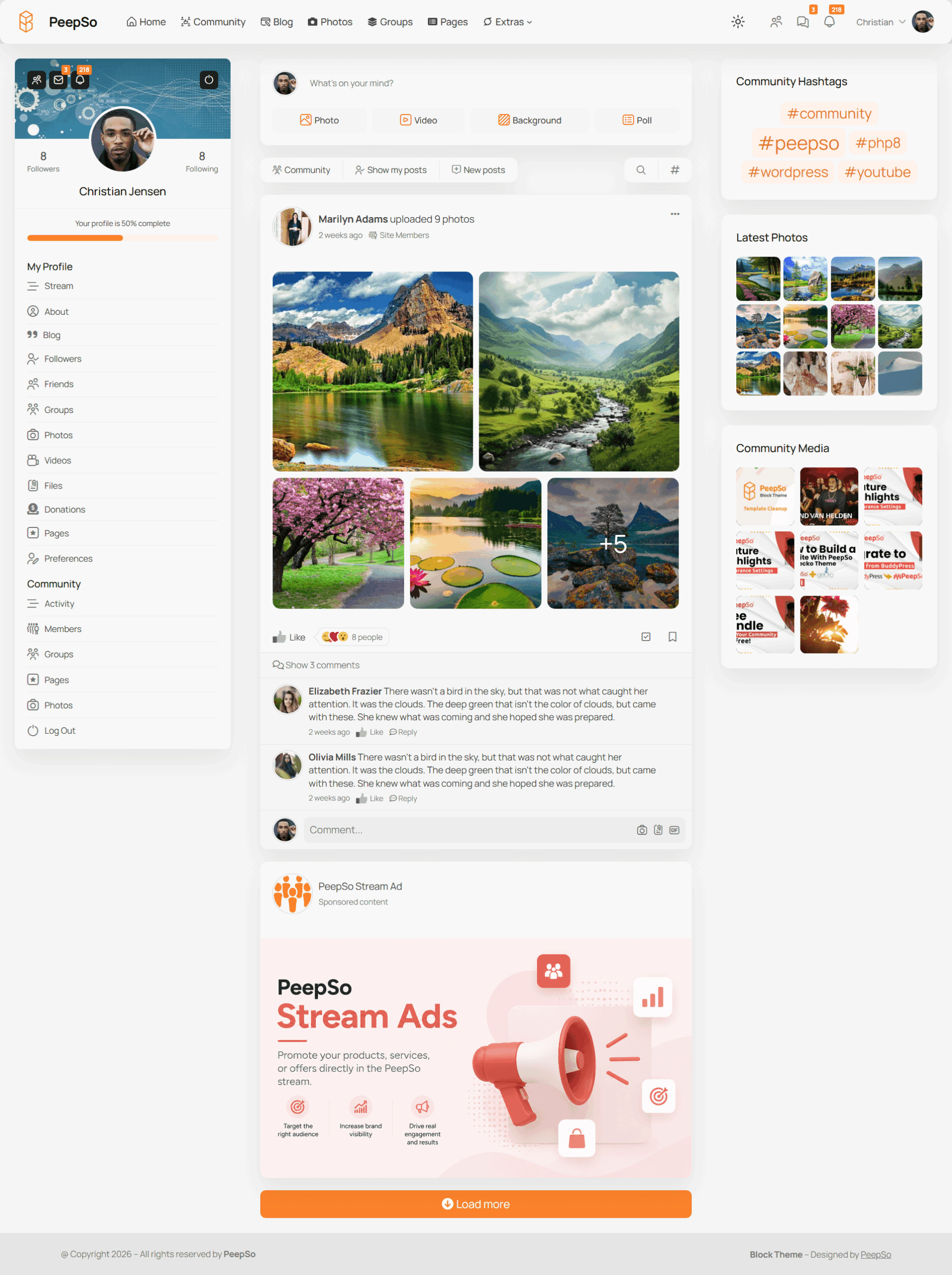
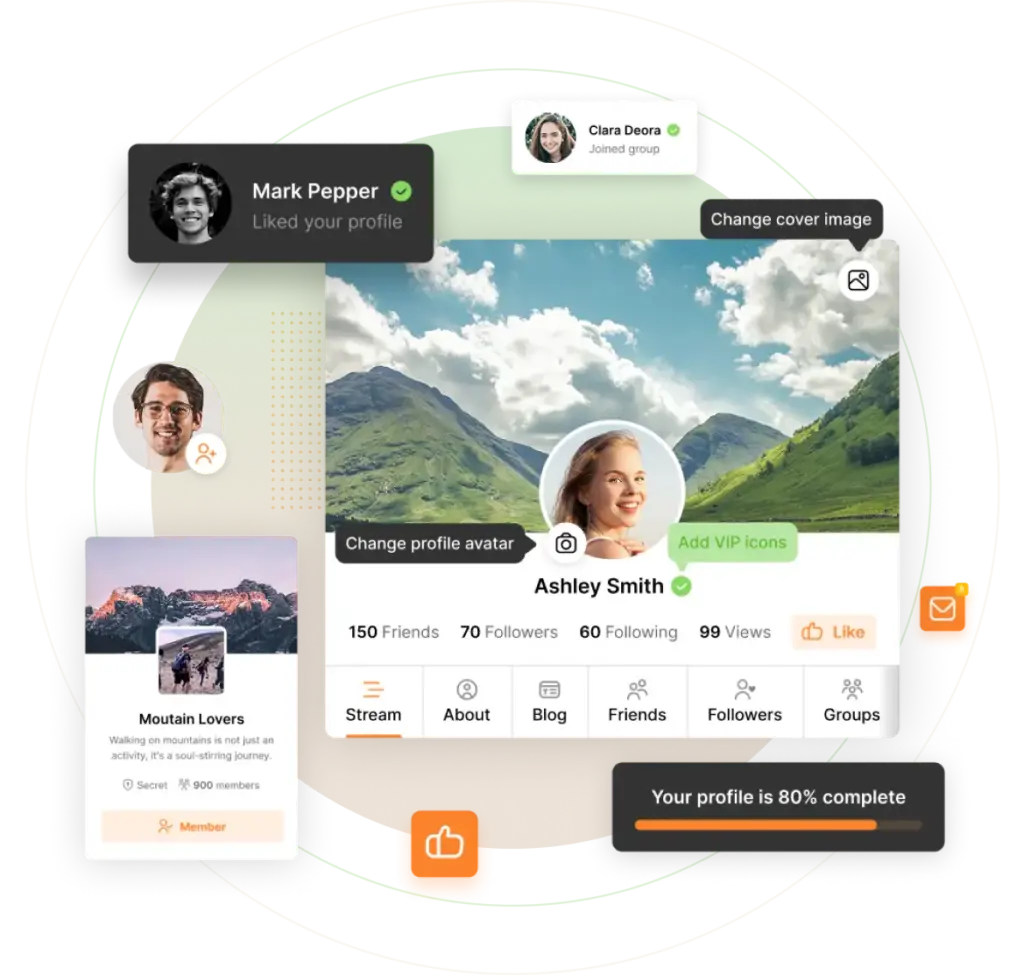
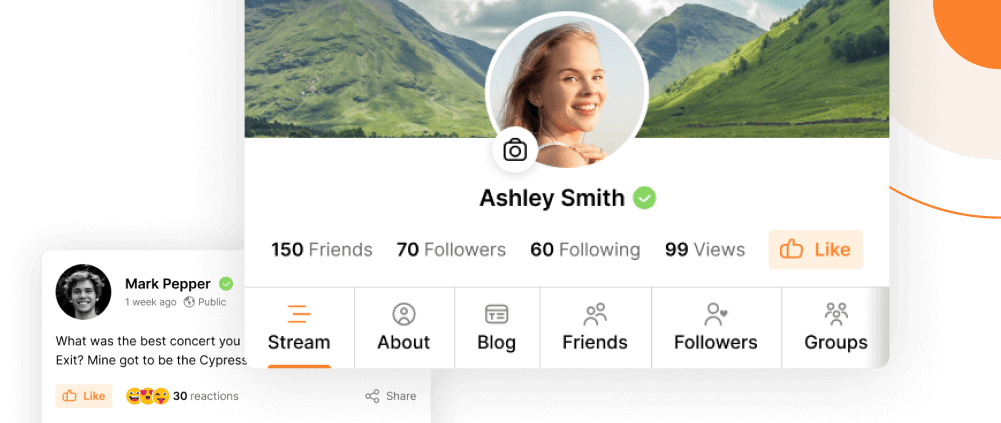
With PeepSo, members can have profiles that live inside the WordPress community. Profiles help people recognize each other, understand who they are talking to, and build trust over time.
For creators, this is useful because community is not only about messages. It is about relationships.
A course student may want to find other students with similar goals. A membership site member may want to follow another member’s updates. A professional community may need profile details that make networking easier.
Member profiles turn a group of visitors into a recognizable community.
Discord can support identity inside a server, but a WordPress community website makes that identity part of the owned brand experience.
Activity Streams vs Chat Channels
Discord channels move quickly.
That is useful for live energy, but it can make information harder to organize. A busy server can feel active and overwhelming at the same time. New members may not know where to begin. Older discussions can disappear beneath newer messages.
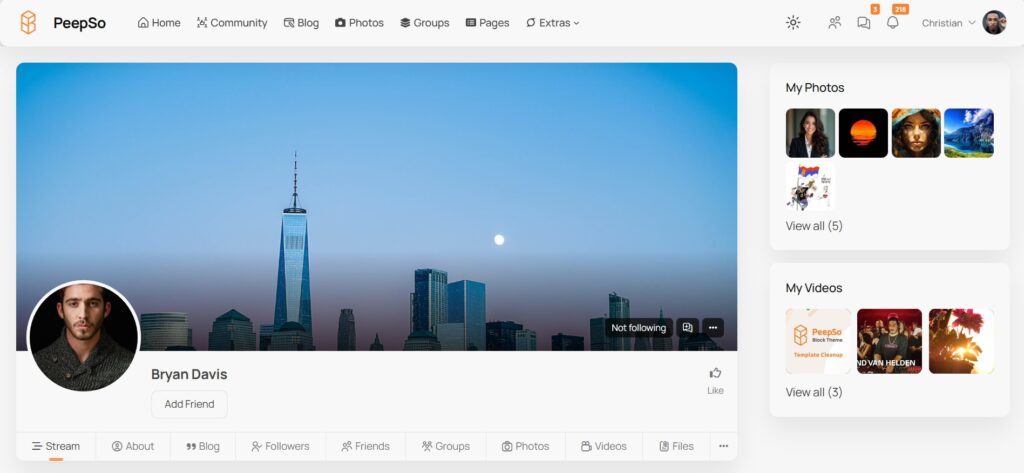
PeepSo uses activity streams to create a social network style experience inside WordPress. Members can post updates, comment, reply, and interact in a format that feels familiar to anyone who has used social platforms.
This gives communities a more natural rhythm.
Members can share updates without needing to choose from too many channels. Groups can have their own activity streams. Site-wide activity can help members discover what is happening across the community.
For many website owners, this is easier to manage than a long list of Discord channels.
The activity stream also supports a stronger sense of place. Members are not just chatting in rooms. They are participating in a community attached to the brand’s website.

PeepSo Power Suite
Groups and Focused Member Spaces
Communities often need smaller spaces.
A course may need groups for each cohort. A fitness community may need groups for beginners, advanced members, nutrition, and accountability. A business membership may need groups for networking, strategy, events, and premium access.
Discord handles this through channels, categories, permissions, and roles.
That can work, but it can also become complicated as the community grows. The server structure may require constant adjustment. New members may feel lost if there are too many channels.
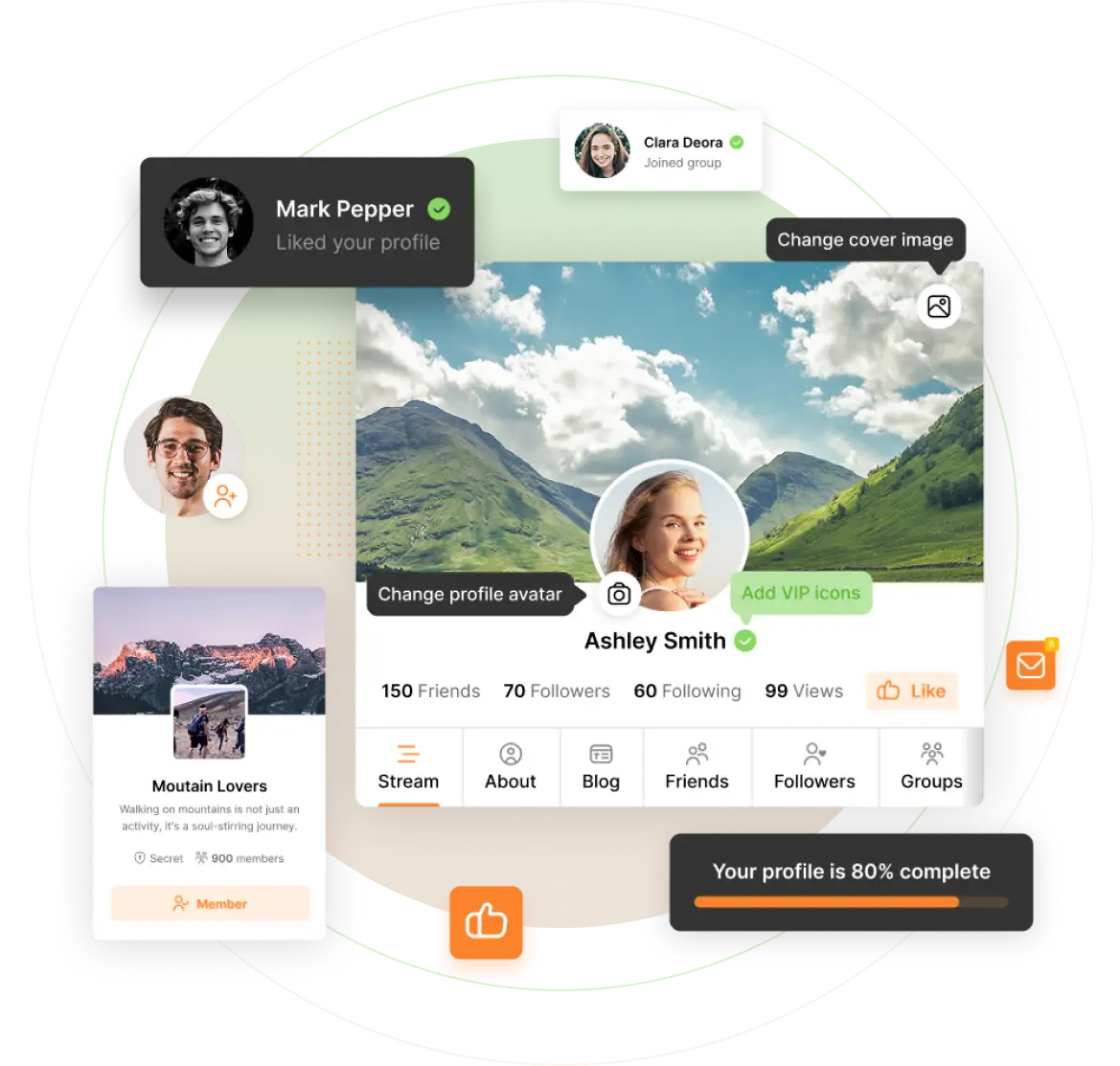
With PeepSo, groups give WordPress communities a cleaner way to organize member spaces. Groups can be used for courses, interests, private discussions, teams, customer segments, or paid member areas.
This is a practical advantage for membership site owners.
Instead of scattering community activity across a separate platform, groups can support the same business model already running through WordPress.
A LearnDash course can sit on the same website as a student community. WooCommerce products can exist alongside customer discussions. Event listings can connect with member activity. Advertising placements can be managed through WordPress tools.
The result is a community that supports the business rather than sitting beside it.
Search, SEO, and Discoverability
Discord is not built for SEO.
Private server conversations are not content assets for search engines. Even public-facing Discord discovery does not replace a searchable WordPress website with optimized articles, landing pages, community pages, and structured content.
For website owners, this is a major limitation.
A useful discussion inside Discord may help the members who saw it, but it rarely helps attract new visitors from Google. A valuable answer inside a WordPress site can be connected to blog content, support resources, product pages, course pages, or public community areas.
A community website gives site owners more ways to build search visibility.
Blog posts can answer common questions. Community pages can support brand authority. Public resources can attract visitors. Private groups can serve paying members. Landing pages can convert traffic into registrations.
Discord is excellent for active members who are already inside the server.
A WordPress community website is stronger for attracting, educating, converting, and retaining members over time.
Monetization and Business Integration
A serious community usually needs a business model.
That may include memberships, courses, digital products, coaching, sponsorships, events, paid groups, subscriptions, or advertising.
Discord has monetization options, including server subscriptions in supported contexts. That may work for some creators, especially those who want simple paid access inside Discord.
A WordPress community website offers broader control.
With PeepSo, community features can connect with the larger WordPress ecosystem. Site owners can build around WooCommerce, LearnDash, WP Event Manager, Advanced Ads, and other integrations that support revenue, education, events, and marketing.
This is where WordPress becomes powerful.
A creator can sell a course, place students into a private community, host member discussions, promote events, display targeted ads, and publish educational content on the same site.
A membership owner can create a premium experience without forcing members to bounce between unrelated tools.
A business can use community engagement to support customer retention, product education, and brand loyalty.
Discord can help conversations happen.
A WordPress community website can help the entire business grow.
Branding and User Experience
Brand experience matters.
Discord always feels like Discord. Server icons, banners, roles, and channel names can be customized, but the overall experience remains inside Discord’s interface.
That can be fine for casual communities.
For businesses, course creators, and membership brands, the community experience should feel like part of the brand. The design, navigation, colors, pages, calls to action, member journey, and content should all work together.
A WordPress community website allows that.
With PeepSo, the community becomes part of the site experience. Members can move from a blog article to a discussion, from a course lesson to a group, from a profile to a message, or from a landing page to registration without leaving the website.
That continuity creates a more professional experience.
It also makes the community feel less disposable. Members are not just joining another server. They are joining a branded destination.
Notifications and Member Engagement
Engagement depends on timely reminders.
Discord is strong at real-time notifications, especially for users who already keep the app open. That is one of its biggest advantages. Members can see new messages, replies, mentions, and events quickly.
The challenge is noise.
Busy servers can produce too many alerts. Members may mute channels, mute servers, or stop checking. Important updates can compete with casual conversation.
PeepSo includes notifications that support member engagement inside the community website. Notifications can help members return to conversations, replies, group activity, messages, and other interactions that are relevant to them.
For WordPress site owners, this creates a different kind of engagement loop.
Members return to the website, not only to a chat app. That return visit can expose them to courses, posts, products, events, and member-only content.
Discord keeps people active inside Discord.
A PeepSo community brings activity back to the owned website.
Private Messaging and Relationship Building
Healthy communities need both public and private interaction.
Discord supports direct messages and server conversations. That makes it easy for members to connect quickly.
A WordPress community also needs private communication, especially when the community supports learning, coaching, networking, or support.
PeepSo includes a messaging interface that helps members communicate inside the community environment. This keeps conversations connected to the website instead of pushing members away to other platforms.
For professional communities, that is valuable.
Members can discover each other through profiles, participate in groups, and continue conversations privately. The community becomes a place where relationships develop naturally.
A strong community is not only a content library or a chat room. It is a network of people who recognize, trust, and support each other.
Courses, Memberships, and Customer Communities
Course builders often start with Discord because it feels easy.
The problem comes when students need structure.
Students need lessons, resources, progress, discussion, support, accountability, and community. Discord can handle conversation, but it does not replace a course platform or a website experience.
With WordPress, PeepSo can sit alongside course tools, membership tools, ecommerce tools, and event tools. That makes it easier to create a complete student experience.
A course creator can publish lessons in LearnDash, create a private PeepSo group for students, use WooCommerce for payment, and keep the student community on the same domain.
A membership site can use PeepSo groups for member discussions, profiles for networking, messaging for private connection, and the activity stream for ongoing engagement.
A product business can create a customer community where buyers ask questions, share results, and connect with the brand.
This is much harder when the community is separated from the website.
Moderation and Community Management
Both Discord and community websites need moderation.
Discord includes tools for roles, permissions, rules, onboarding, moderation, and channel access. Those tools can be powerful, especially for large chat-based communities.
A WordPress community website has a different management advantage. The community structure can be designed around the business from the beginning.
Instead of managing a server that grows into a maze of channels, site owners can create clear community areas, meaningful groups, member profiles, content pages, and access rules.
With PeepSo, moderation happens inside the website environment. Community management can be connected to the same WordPress admin workflow that already supports content, users, products, and site settings.
That centralization is useful for small teams.
A creator should not need to manage a website, an LMS, a checkout system, a Discord server, multiple bots, and several disconnected member experiences just to run a community.
A more unified setup is easier to maintain.
Discord vs PeepSo: Which Should You Choose?
Discord is the better choice when the community is mainly about live chat, gaming, voice rooms, informal conversation, and fast coordination.
A WordPress community website with PeepSo is the better choice when the community is part of a serious brand, course, membership, customer experience, or long-term business strategy.
Discord is useful for immediacy.
PeepSo is better for ownership, structure, branding, WordPress integration, member profiles, groups, activity streams, content strategy, and long-term community value.
Many communities can use both, but the main home should be chosen carefully.
If Discord is the primary home, the brand builds on rented land.
If the WordPress website is the primary home, the community strengthens an owned platform.
For website owners, creators, course builders, and membership businesses, that difference is difficult to ignore.
Conclusion
Discord is popular because it is fast, familiar, and excellent for live conversation. It can be a useful tool for casual communities, gaming groups, and real-time interaction.
A community website is stronger when the goal is long-term ownership, brand control, member relationships, SEO, monetization, and business integration.
For creators, course builders, membership site owners, and entrepreneurs, the community should not be separated from the platform that drives the business.
With PeepSo, WordPress site owners can build a private social network with activity streams, member profiles, groups, pages, media, notifications, and messaging directly inside their own website.
Discord gives communities a place to talk. PeepSo gives communities a place to grow.

Reactions & comments
Comments