
Creators built entire businesses on Facebook Groups because they were easy to start. A group could be launched in minutes, members already had Facebook accounts, and early engagement often felt natural. That convenience is still useful, but it comes with a cost.
As creators mature, the limits become clearer. The audience is not fully owned. Visibility depends on a platform feed. The community experience sits beside distractions, ads, personal updates, and competing groups. Monetization is harder to control. Branding is limited. Member data is restricted. Growth can be unpredictable.
For creators selling courses, memberships, coaching, digital products, events, or premium content, those limits are no longer small inconveniences. They affect revenue, retention, and the long-term value of the community.
A better approach is to build the community on owned ground. For WordPress site owners, PeepSo makes that possible by turning a WordPress website into a private social network with activity streams, member profiles, groups, pages, media, notifications, messaging, and integrations with tools creators already use.
Facebook Groups Were Built for Convenience, Not Ownership
Facebook Groups are excellent for starting conversations quickly. They remove friction because many people already use Facebook. That makes them attractive for creators testing an idea, launching a free audience space, or gathering early feedback.
The problem appears when the group becomes central to the business.
A creator may spend years encouraging members to post, comment, share wins, answer questions, and invite others. That activity creates real value, but it remains inside Facebook. The creator does not control the platform, the interface, the roadmap, or the full member experience.
A paid membership site, course community, or coaching group needs more than conversation. It needs structure. It needs reliable access. It needs a clear brand experience. It needs member journeys that connect discussion, learning, products, events, private messaging, and support.
That is where Facebook Groups begin to feel too limited.
With PeepSo, the community lives inside WordPress. Creators can connect discussion to their own website, content, offers, courses, and member areas. Instead of sending members away from the site, the community becomes part of the creator’s owned platform.
The Algorithm Problem Is Getting Harder to Ignore
Creators do not just need members to join. They need members to see important conversations.
Inside Facebook, visibility depends heavily on the feed experience. A member may belong to dozens of groups, follow many pages, interact with friends, and receive endless notifications. Even when someone wants to participate, the creator is competing against the entire Facebook environment.
That creates a frustrating pattern.
A creator publishes an important post, but only a fraction of members see it. A live session announcement gets buried. A course discussion receives fewer replies than expected. A launch post performs well one week and disappears the next.
The creator then has to work harder to create the same level of attention.
An owned community changes the dynamic. Members visit a focused destination built around the creator’s brand, content, and purpose. The community is not fighting against social media noise in the same way.
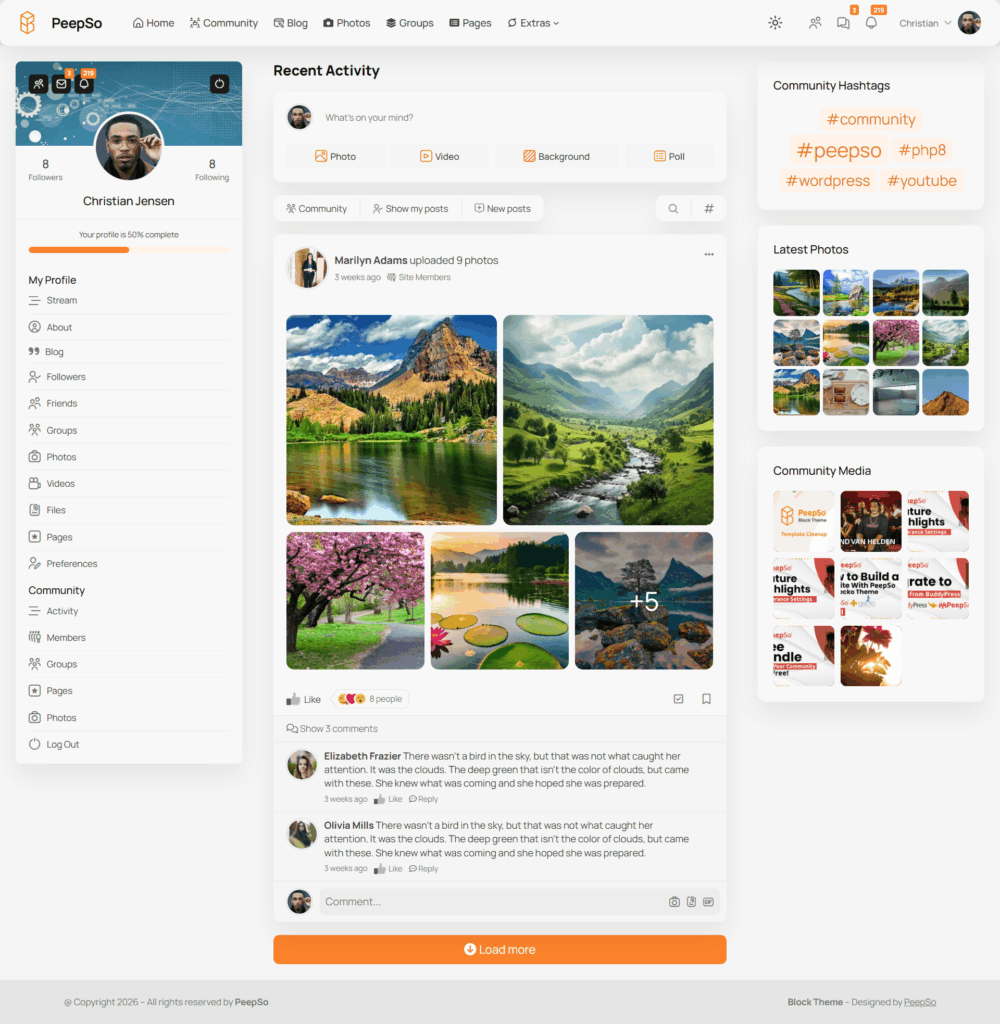
With PeepSo, site owners can create activity streams, groups, pages, and notifications inside WordPress. Members are not dropped into a general social platform where everything competes for attention. They are inside a community designed around one brand, one mission, and one member experience.
Creators Want Their Brand to Feel Like the Destination
A serious creator business needs a branded home.
Facebook Groups always feel like Facebook first. The group name, cover image, and content may belong to the creator, but the environment is still controlled by Facebook. The layout, navigation, member behavior, and surrounding experience all reinforce Facebook’s platform identity.
That can be fine for a free group. It is less ideal for a premium community.
When members pay for access, they expect a more intentional experience. They want to feel like they are joining a dedicated space, not just another tab inside a social app. Creators also need the ability to shape the journey from discovery to purchase to participation.
A WordPress community website gives creators that control.
With PeepSo, the community can match the site’s brand, content strategy, membership model, and business goals. A course creator can connect lessons with discussion groups. A coach can create member spaces around programs. A digital product seller can bring buyers into customer communities. A niche publisher can create a private network around premium content.
The result is a community that feels like part of the creator’s business, not an add-on borrowed from another platform.
Member Data and Business Intelligence Are Too Important to Leave Behind
A creator community is not just a place for comments. It is a source of insight.
Creators need to understand who their members are, what they care about, what content they engage with, which groups are active, and where people need help. That information shapes products, courses, emails, offers, events, and support.
On Facebook, creators get some admin tools, but they do not get the same ownership and flexibility they can build into a WordPress-based system. The community sits away from the creator’s website, CRM, store, course platform, membership plugin, and analytics setup.
That separation creates gaps.
A creator might have email subscribers in one place, course students in another, product customers in WooCommerce, and community members in Facebook. The more tools are separated, the harder it becomes to understand the full member relationship.
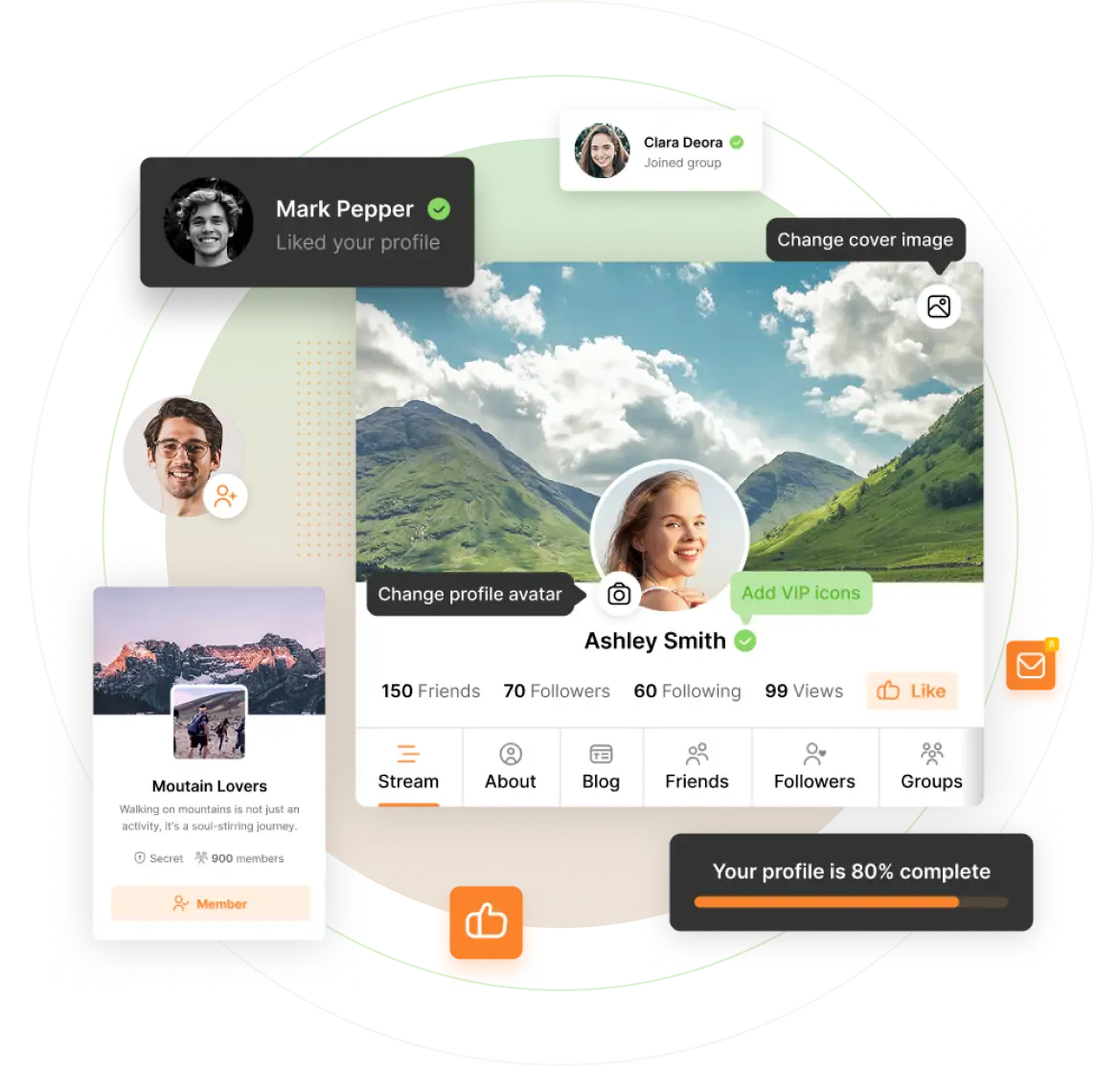
PeepSo helps solve that by keeping the community inside WordPress. This allows creators to build around their existing website structure and connect community activity with other WordPress tools. For many site owners, that is the difference between running a group and building a real member ecosystem.
Monetization Needs More Than a Group Feed
Creators rarely move away from Facebook Groups because they dislike conversation. They move because conversation alone is not enough.
A modern creator business may include paid memberships, online courses, coaching programs, downloads, events, products, sponsorships, private groups, and premium support. The community should support all of that.
Facebook Groups can help with engagement, but they are not a complete business platform. Creators often need outside tools for checkout, email, course delivery, customer management, and gated access. The result can feel fragmented.
WordPress gives creators more room to design their monetization model.
With PeepSo, community features can sit alongside WooCommerce, LearnDash, Advanced Ads, WP Event Manager, and other WordPress integrations. That gives creators practical ways to connect discussion with commerce, learning, advertising, events, and membership access.
A fitness creator could run paid challenge groups. A course builder could create private discussion spaces for each program. A membership site owner could give premium members access to exclusive groups and direct messaging. A niche media brand could add advertising opportunities around an active community.
The value is not just that members can talk. The value is that the community supports the business model behind the creator’s work.

PeepSo Power Suite
Facebook Groups Can Make Community Search and Content Reuse Difficult
Creators often underestimate the value of old discussions.
A strong community produces answers, examples, member stories, product feedback, troubleshooting advice, and practical conversations. Over time, that content becomes a knowledge base. It can reduce support requests, improve member onboarding, and help new members feel connected faster.
In a fast-moving Facebook Group, valuable posts can disappear quickly. Members may ask the same questions repeatedly because older answers are hard to find or poorly organized. Important resources compete with casual updates, memes, announcements, and unrelated conversations.
That creates extra work for the creator and moderators.
A WordPress-based community can be more intentional. Content can be supported by pages, posts, course areas, documentation, product pages, and structured member groups. The community does not have to carry every job by itself.
With PeepSo, creators can use groups and activity streams for conversation while keeping evergreen resources on the WordPress site. That combination helps separate timely discussion from long-term content. Members get the social experience they expect, while creators keep the website organized for learning, support, and growth.
Moderation Becomes More Serious as Communities Grow
A small Facebook Group may be easy to manage. A larger community is different.
Growth brings more posts, more questions, more personality clashes, more support issues, and more expectations. Creators need clear rules, reliable moderation, member roles, and spaces for different types of conversation.
The challenge is not only removing bad content. It is shaping the culture.
A good community needs signals that guide members. Where should introductions go? Where should support questions be posted? Which spaces are public to all members and which are private? How do members know where to find course discussions, event updates, or expert feedback?
Facebook Groups often become one large stream of mixed conversations. That can work for casual communities, but it becomes harder when the community supports paid programs or professional outcomes.
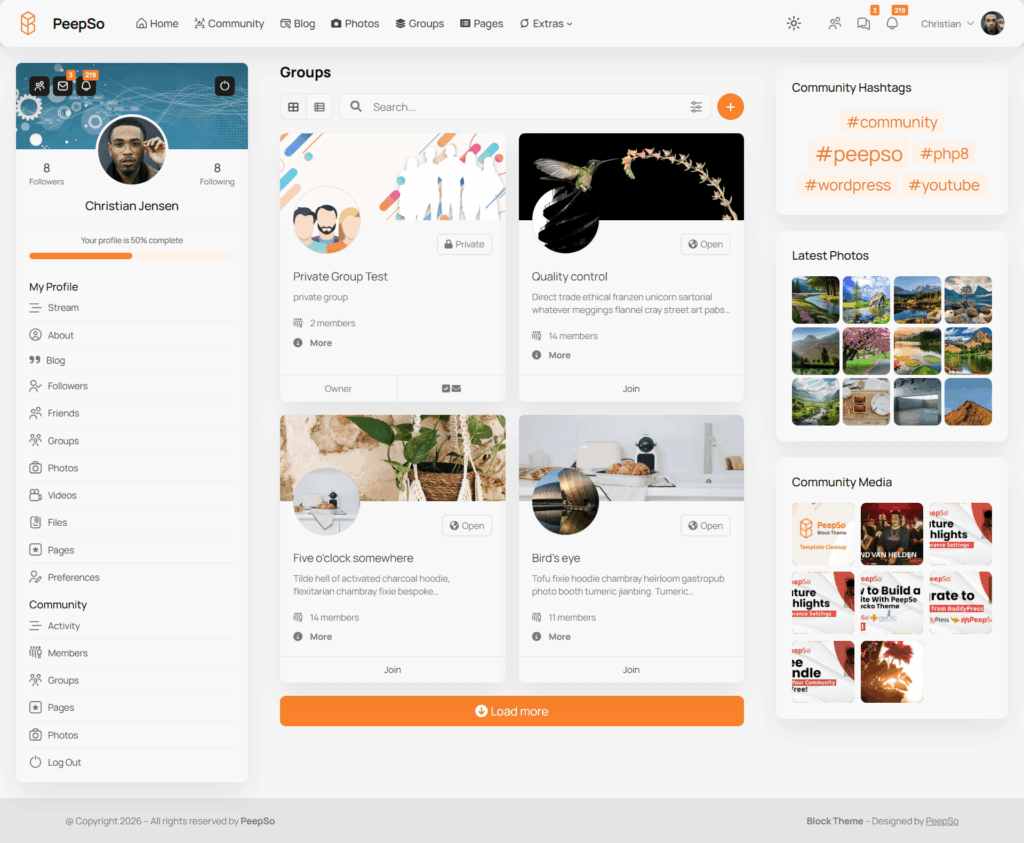
PeepSo gives creators a more flexible structure inside WordPress. Groups can be used for specific topics, cohorts, courses, interest areas, locations, or membership levels. Pages can support branded spaces and community organization. Notifications and messaging help members stay connected without relying only on a crowded social feed.
That structure helps creators build a community that scales without becoming chaotic.
The Member Experience Is Cleaner Outside Facebook
A member may join a Facebook Group for a creator’s content, but the platform is full of distractions.
A notification can pull them to a friend’s post. A recommended video can take them away from the group. Another group may compete for the same attention. Ads and unrelated content sit nearby. Even motivated members can lose focus.
For creators offering education, support, accountability, or transformation, focus is valuable.
A private community on WordPress creates a cleaner experience. Members enter a space built around the topic they joined for. The navigation can point them toward discussions, courses, downloads, events, member profiles, and support. The creator decides what deserves attention.
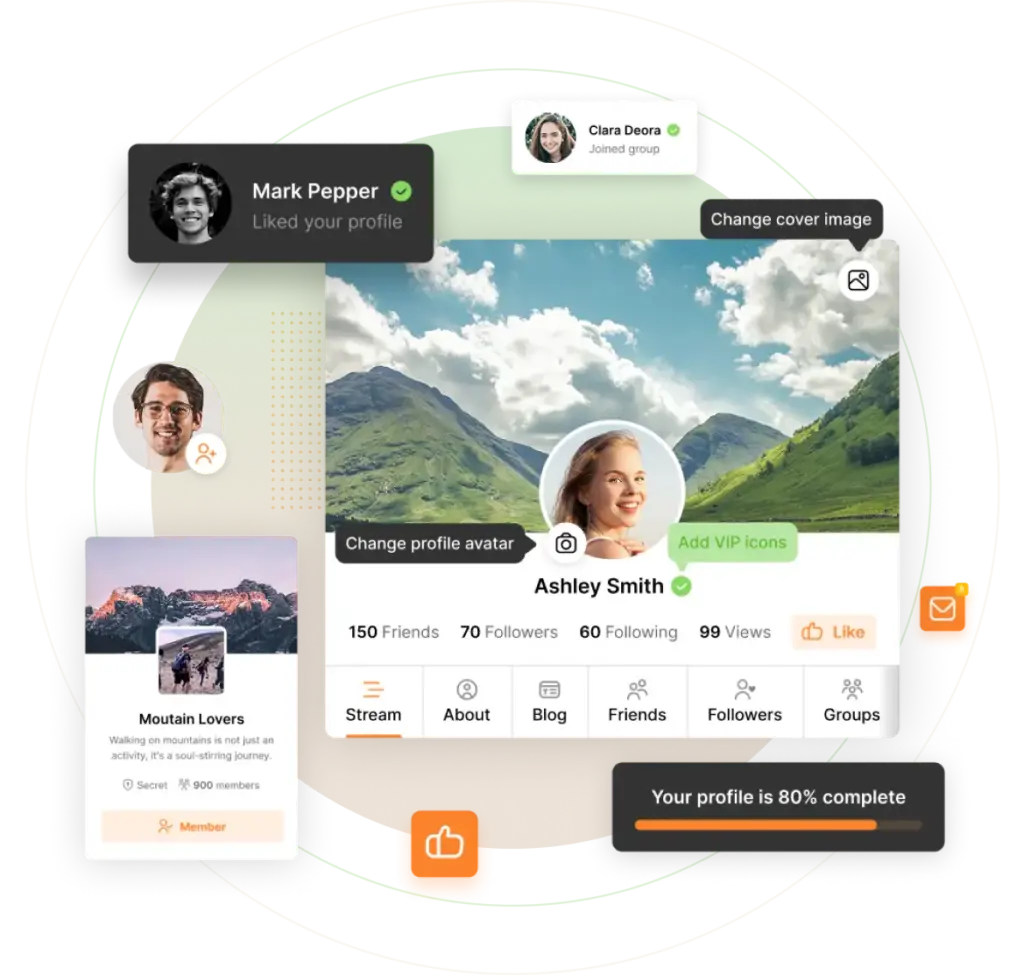
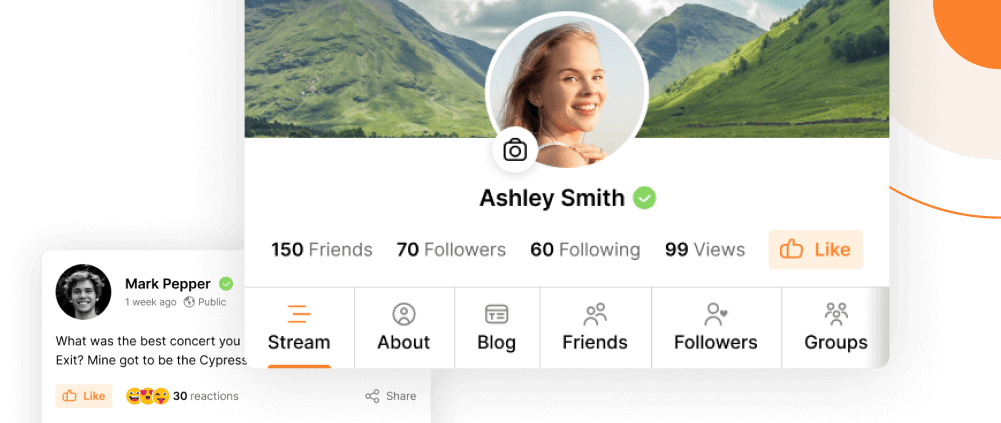
With PeepSo, the member experience can include activity streams for daily engagement, profiles for identity, groups for focused discussion, media for photos and videos, notifications for updates, and private messaging for direct connection.
That feels familiar enough for members to use comfortably, but focused enough to support a serious creator business.
Creators Are Comparing Facebook Groups with Better Alternatives
Facebook Groups are not the only option creators evaluate.
Discord is popular for real-time chat, but it can feel overwhelming for members who prefer structured discussion, searchable content, and a website-based experience. Mighty Networks and Circle offer hosted community platforms, but creators may not want another closed platform between them and their audience. BuddyPress and BuddyBoss appeal to WordPress users, but many site owners want a practical balance of social features, ownership, usability, and integration flexibility.
That is where PeepSo becomes especially strong.
PeepSo is built for WordPress site owners who want community features without giving up control. It gives creators a way to build a Facebook-style community on their own website while still benefiting from WordPress flexibility.
For entrepreneurs, course builders, coaches, and membership site owners, that combination is powerful. They can own the website, shape the community, connect monetization tools, and build a member experience that supports their brand over the long term.
What Creators Gain by Building with PeepSo
The biggest gain is control. Creators control where the community lives, how it looks, how members move through it, which tools connect to it, and how it supports the business. They are no longer building the most valuable part of their audience experience entirely inside someone else’s platform.
They also gain flexibility. A beginner community can start with simple activity streams and profiles. A growing creator can add groups, pages, media, messaging, and notifications. A mature business can connect commerce, courses, ads, events, memberships, and other WordPress tools.
That flexibility makes PeepSo a practical solution for creators at different stages. It is not only for large communities. It works for creators who want to start with ownership from the beginning and for established site owners who have outgrown Facebook Groups.
The most important shift is strategic. A Facebook Group is usually a place where the audience gathers. A PeepSo community can become part of the business itself.
Conclusion
Creators are moving away from Facebook Groups because the needs of creator businesses have changed.
Early-stage convenience is no longer enough. Creators need ownership, predictable access to members, stronger branding, better organization, cleaner member experiences, deeper integrations, and monetization options that fit their business model.
Facebook Groups can still play a useful role for discovery and casual engagement. They are less effective as the foundation for a serious community business.
For WordPress site owners, PeepSo offers a better path. It brings social networking features into an owned website, including activity streams, member profiles, groups, pages, media, notifications, and messaging. It also supports the broader WordPress ecosystem that creators depend on for courses, commerce, advertising, events, and memberships.
The future of creator communities is not just about gathering people in a group. It is about building a platform the creator owns, shapes, and grows over time.

Reactions & comments
Comments