

A lot of creators start with the wrong idea about privacy. They build a community, lock everything behind registration, and assume people will join because access is restricted. The thinking sounds reasonable at first. If the space is private, it must feel more valuable. That is usually where the problem begins.
Most people do not join a community simply because it is hidden. They join because they understand what the community is for, who it helps, and what kind of experience they will have once they get inside. When the entire site is closed before that value is clear, visitors are being asked to commit without enough context.
A better approach is to treat privacy as part of the community strategy, not the entire strategy. The community can be private in the places that need protection, while still showing enough value to attract the right members. For creators building on WordPress, PeepSo gives that flexibility with landing pages, user limits, and integrations that connect the community to memberships, courses, and ecommerce.
The mistake creators make with private communities
Creators often confuse privacy with demand.
They think that if a space is members-only, people will automatically see it as exclusive. In reality, a closed door does not create desire on its own. It can just as easily create doubt. Visitors cannot see the tone of the conversation, the quality of the members, the usefulness of the discussions, or whether the community is even active.
That creates a trust gap right at the point where you want someone to join.
A private online community needs a reason to exist beyond the fact that it is private. It needs a clear promise. It needs a visible identity. It needs to answer simple questions before asking for registration. Who is this for? What happens here? Why is this better than a newsletter, a Facebook Group, a Discord server, or a random comment area online?
For creators, the real issue is not whether the community is open or closed. The real issue is whether the privacy model supports growth, trust, and member experience.
Private should protect value, not hide it
The strongest private communities protect the parts that actually need protection.
That usually means the discussions, the member directory, premium resources, specialized groups, course-related conversations, customer-only spaces, or coaching access. Those are the things members are paying for, contributing to, or trusting with their time.
The public side should do a different job. It should explain the value of the community clearly enough that the right person wants to join.
This is where many creators leave growth on the table. They hide the very signals that help people make a decision. A strong public-facing entry point can show the purpose of the community, the type of members it serves, the transformation it supports, and the experience people get once they become part of it. Then the real interaction stays private.
With PeepSo, site owners can create that layered approach inside WordPress instead of choosing an all-or-nothing setup. Community pages, navigation, landing page, and activity visibility settings make it possible to decide what guests see and what stays behind the membership wall.
The two paths creators can take
There are two legitimate ways to create a private online community.
The first is the better path for most creators. The second is valid for specific business models.
Path one: layered privacy, which is the best fit for most creators
Layered privacy means the community is private where it counts, but not invisible from the outside.
Your join page, brand message, offer, and explanation of the community stay visible. Visitors can understand who the community is for and why it exists. Once someone becomes a member, they gain access to the discussion areas, member profiles, private groups, premium content, and direct interaction.
This model works especially well for membership sites, creator brands, coaching businesses, course communities, paid newsletters, and customer communities. People need enough context to trust the offer, and members still need a protected environment once they are inside.
That balance is one of the biggest advantages of building the community on your own WordPress site. PeepSo lets creators keep the business, branding, and member experience in one place rather than splitting everything across separate platforms. It is built specifically for WordPress community sites and private social networks, with the core social features needed to make the site feel active and connected.
Path two: a completely locked community
Some communities should be fully hidden from public view.
In that setup, users need to register before they can see the activity stream, member directory, discussions, and internal spaces. This works when privacy is part of the product itself. A mastermind community, private coaching program, client portal, internal organization, premium peer network, less “Safe For Work” communities, or sensitive support community can justify a much tighter wall.
Even in that model, the outside world still needs an explanation. A visitor should not hit a login screen and learn nothing. The public-facing part of the site still needs to communicate what the community is, who it is for, and why the experience is intentionally closed.
The mistake is not building a fully locked community. The mistake is locking everything while giving no reason for anyone to care.
What people need to understand before they join
Before someone joins a private online community, they need confidence.
They do not need full access. They do need enough clarity to make a decision.
That usually starts with positioning. The visitor should understand exactly who the community is for. “A private creator community” is too vague. A better description explains what kind of creator, what stage they are in, and what they will gain by joining.
The next part is the promise. Tell visitors what happens inside the community. Do members get ongoing discussions, direct support, networking, accountability, feedback, resources, live events, or program-specific access? The more concrete the promise, the easier it is for the right person to say yes.
Then comes evidence. That can be testimonials, member stories, screenshots, topic previews, or a strong explanation of the format. You do not need to expose private conversations. You do need to make the value believable.
This is another reason the layered model works so well. It lets creators preserve private interaction while still giving prospective members enough proof that the community is worth joining.
Build the private experience around the right spaces
Once the privacy model is clear, the next step is building the community itself.
A private community does not become valuable because it exists. It becomes valuable because members know where to interact, how to participate, and what kind of conversations belong in each space.
Use the activity stream as the center of daily engagement
The activity stream is where the community starts to feel alive.
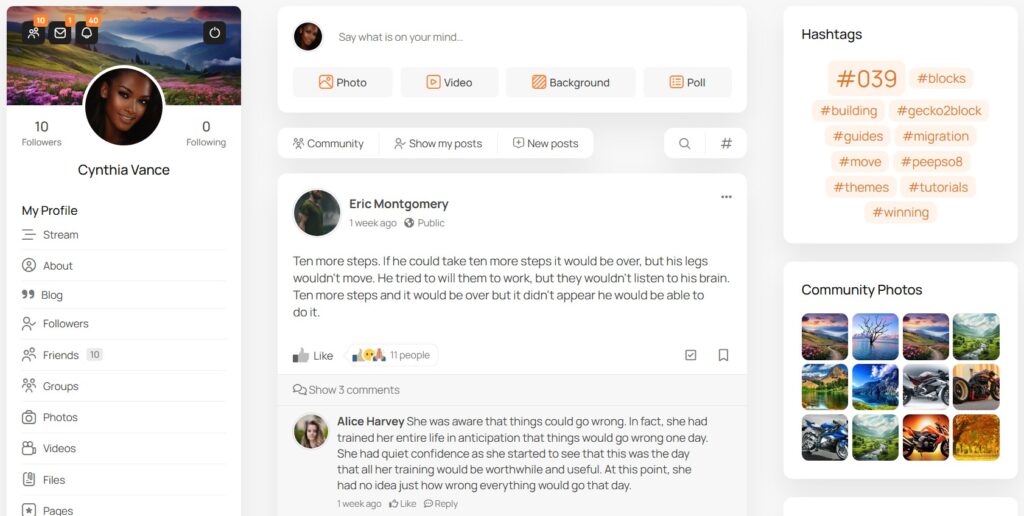
This is where members post updates, ask questions, comment on one another’s progress, react to discussions, and return to see what changed. It gives the site rhythm. Without that rhythm, many private communities feel like static content libraries with a login screen.
PeepSo includes an activity stream built for community posting across profiles, groups, pages, along with nested comments and post interaction features that support ongoing conversation.
Creators can use that stream to anchor weekly questions or events, discussions, announcements, wins, and challenges. That keeps the community moving without forcing every interaction into a formal lesson or event.
Use profiles to make the community feel human
People are more likely to engage when other members feel real.
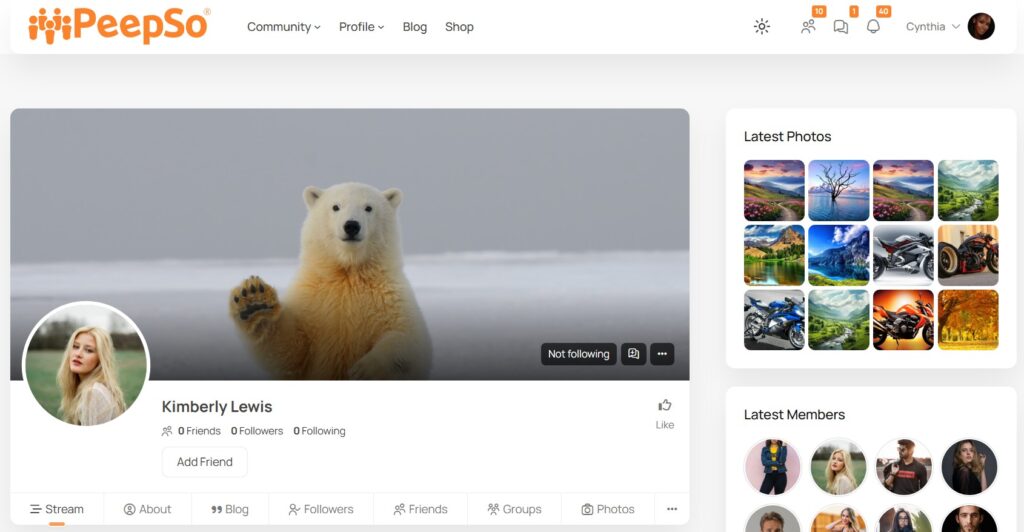
Member profiles make introductions easier, conversations more relevant, and networking more useful. They help members understand who is inside the space, what they do, and why they belong there.
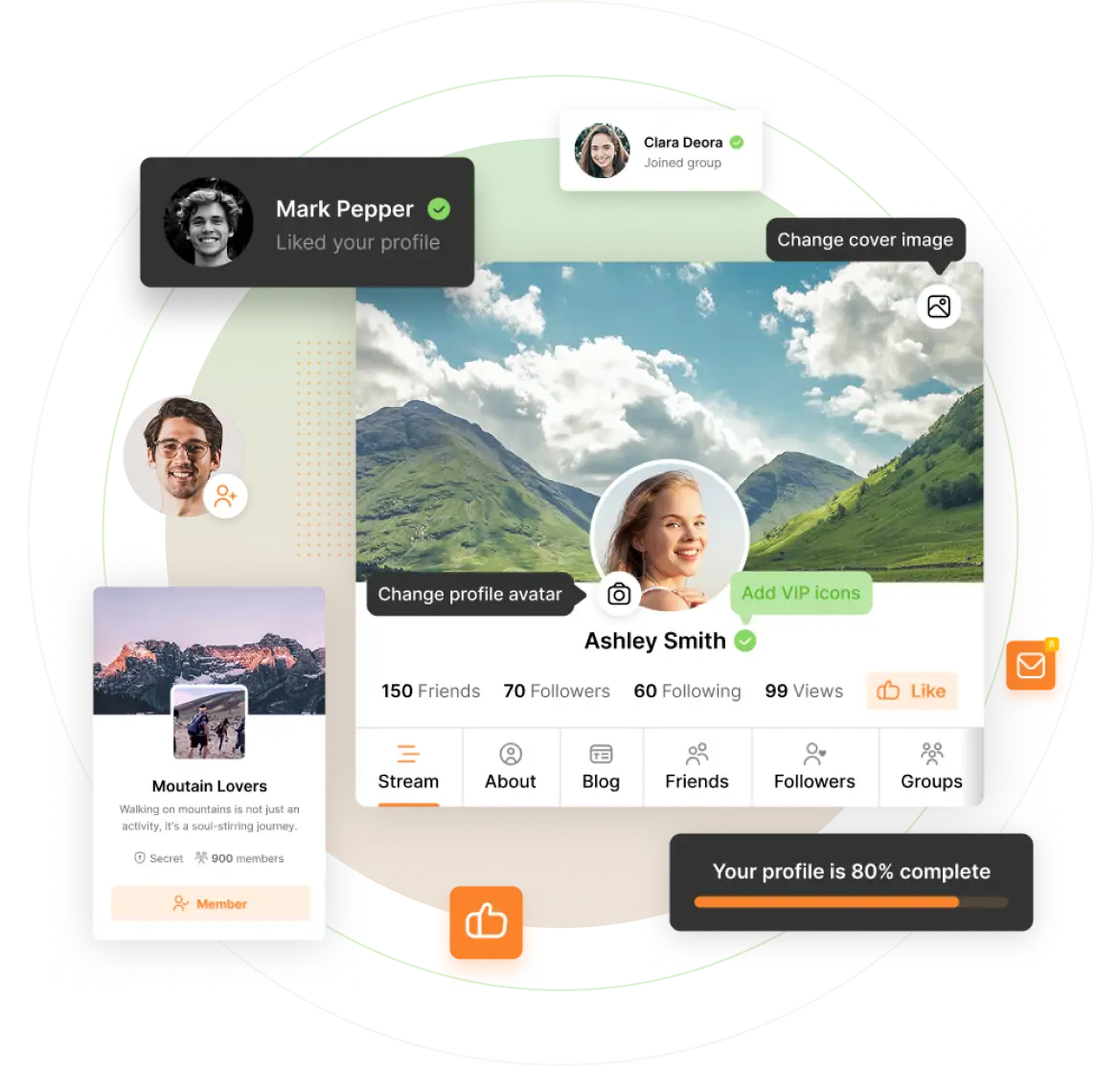
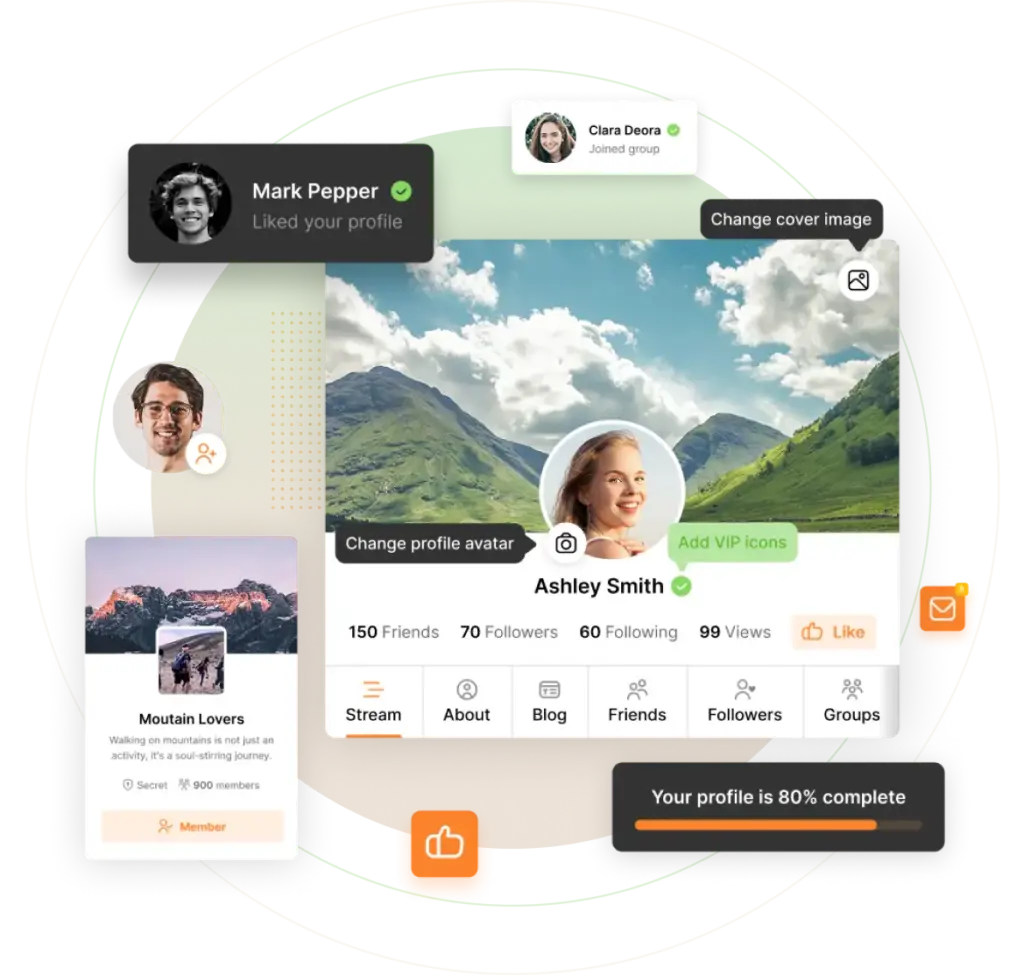
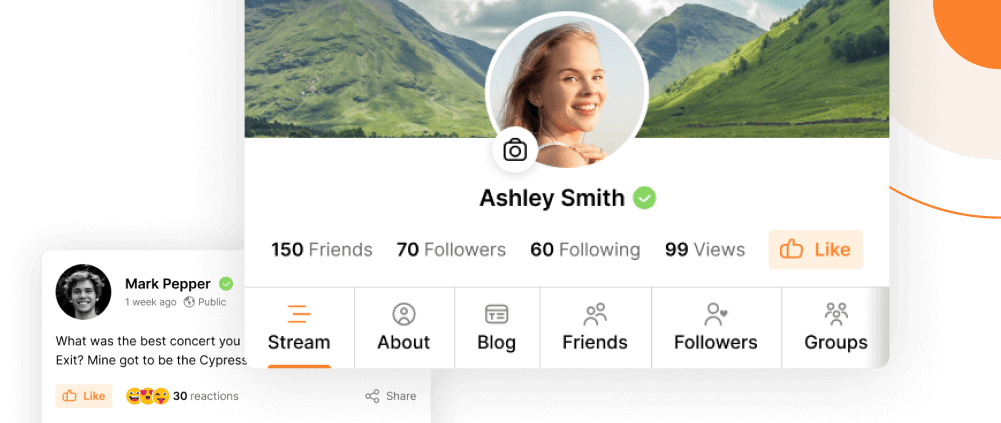
PeepSo includes customizable profiles with user fields, avatars, cover images, and privacy preferences that members can manage on their own accounts.
That gives creators a practical way to shape the member directory around the purpose of the community. A course community might highlight goals or stage. A professional membership might highlight role or expertise. A creator network might focus on niche, audience, or business model.
Use groups to create focused private spaces
Not every conversation belongs in one feed.
Groups help creators organize the community into clearer spaces. You might have a main group for all members, a private group for premium members, a course cohort group, a local meetup group, or a client-only space.
PeepSo supports groups and group-level privacy options, including secret group models, so community owners can create more focused environments inside the larger site.
This is where privacy becomes especially useful. Members do not just want access. They want relevance. Smaller, better-structured spaces reduce noise and make participation easier.
Use pages when the community needs branded or structured sections
Some communities need more than profiles and groups.
Pages can help organize branded spaces, programs, sub-communities, or special areas inside the broader site. For creators who run multiple offers or audience segments, this gives the community more structure without making it feel fragmented.
PeepSo includes Pages as part of its feature set, which is useful when the community needs more formal or brand-oriented spaces connected to the rest of the social experience.
That flexibility is valuable for growing businesses. The community can expand without turning into a single cluttered stream.
Keep communication moving with chat and notifications
A private online community needs more than public posting.
Members also need direct conversation. They need a way to follow up privately, continue smaller discussions, and stay aware of activity that matters to them.
PeepSo includes chat and messaging features, plus notification controls that members can manage from their preferences. That combination helps creators build a space that feels active without demanding constant attention from every member.
Public discussion creates momentum. Private messaging builds relationships. Notifications bring people back at the right moment. Together, those features make a private community feel alive instead of locked away.

PeepSo Power Suite
Connect the community to the rest of the business
For creators, the best private communities do not sit off to the side.
They connect directly to the offers, memberships, products, courses, and customer relationships that already exist on the site. When the community is built inside WordPress, it becomes easier to keep that whole experience under one roof.
That is one of the clearest advantages of PeepSo. It is designed to work as part of a broader WordPress business, with integrations covering areas like ecommerce, memberships, and learning. PeepSo has native integrations with WooCommerce, LearnDash, Tutor LMS, Paid Memberships Pro, WP Event Manager, Advanced Ads, and more.
This gives creators practical options.
A course business can use the community to support students between lessons. A membership site can reserve discussion areas for different levels. A store can keep customers engaged after purchase. A coaching business can offer a private member area without moving the audience to a separate platform.
The result is stronger retention and a more connected brand experience.
Launch with less, then grow with intention
A private online community does not need to launch with every possible space already built.
In fact, that often makes the experience worse. Too many empty groups, too many navigation items, and too many content categories make a new community feel quiet instead of substantial.
Start with the main structure first. Give members one obvious place to begin, one clear reason to participate, and one simple path into deeper engagement. Then expand based on how people actually use the space.
That usually means a strong landing page, a clear join path, a main activity stream, a handful of carefully chosen groups, and an onboarding flow that tells new members what to do first.
A private community grows faster when the structure feels intentional.
Conclusion
Learning how to create a private online community starts with understanding what privacy is supposed to do.
For most creators, privacy should protect the most valuable parts of the experience, not hide the entire value of the community from the people you want to attract. That is why layered privacy is usually the strongest model. It lets the public understand the offer while keeping the real member experience protected.
There is also a place for fully locked communities. When confidentiality, paid access, or member protection is central to the offer, a closed environment can be exactly the right decision. Even then, the outside world still needs a clear reason to step inside.
For WordPress creators, PeepSo is a strong practical solution because it makes both models possible on your own site. You can create a community that is private with purpose, structured for engagement, and connected to the rest of your business through profiles, groups, pages, messaging, notifications, pages, and integrations.
When privacy is used strategically, it becomes a reason to stay. Not just a wall people bounce off.

Reactions & comments
Comments