

Building an online community sounds simple until the first quiet week arrives. A founder launches a group, invites early members, posts a few updates, and expects conversations to grow on their own. Then reality sets in. Members read but do not reply. New people join but do not introduce themselves. Valuable posts disappear inside noisy feeds. The community starts to feel like another content channel instead of a living network.
A thriving community needs more than good intentions. It needs a clear purpose, the right structure, a repeatable engagement system, and a platform that gives the site owner control.
For WordPress site owners, creators, course builders, membership businesses, and entrepreneurs, that platform choice can shape the entire future of the community. Building on rented platforms such as Facebook Groups may feel easy at first, but it also means handing over control of visibility, data, branding, monetization, and member experience.
A better long-term approach is to build the community where the business already lives: on WordPress.
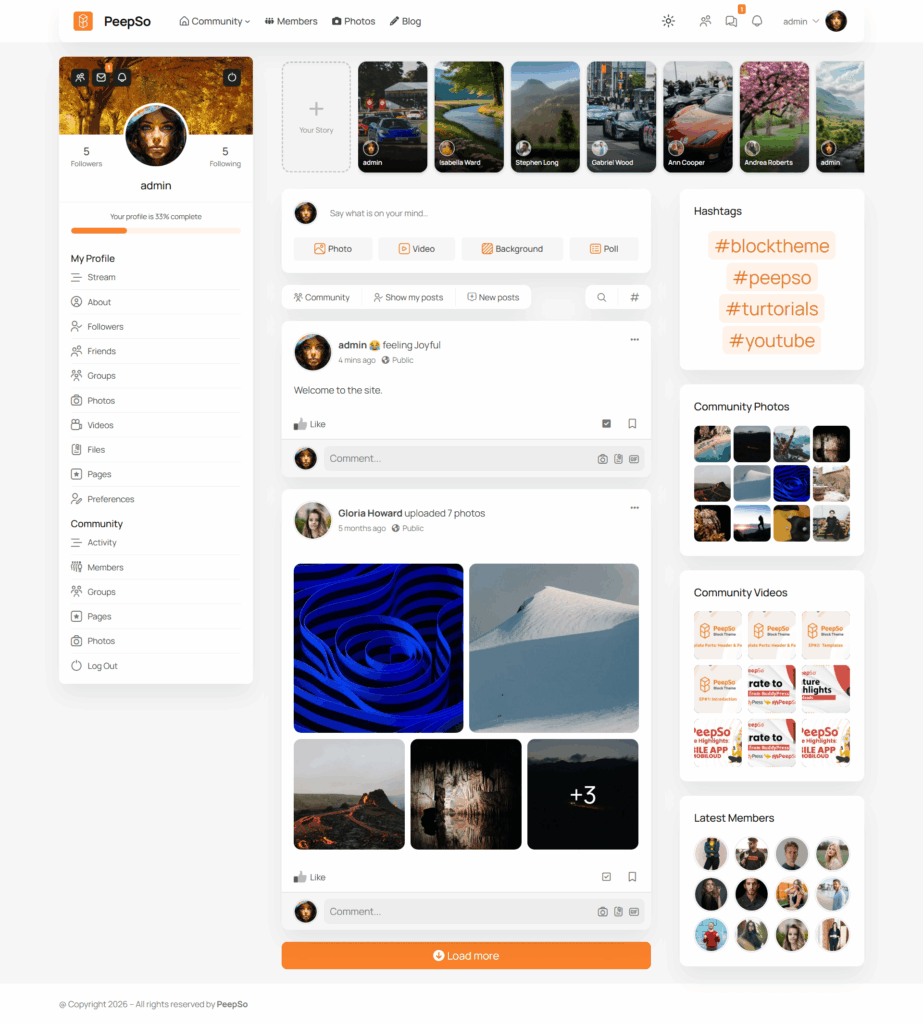
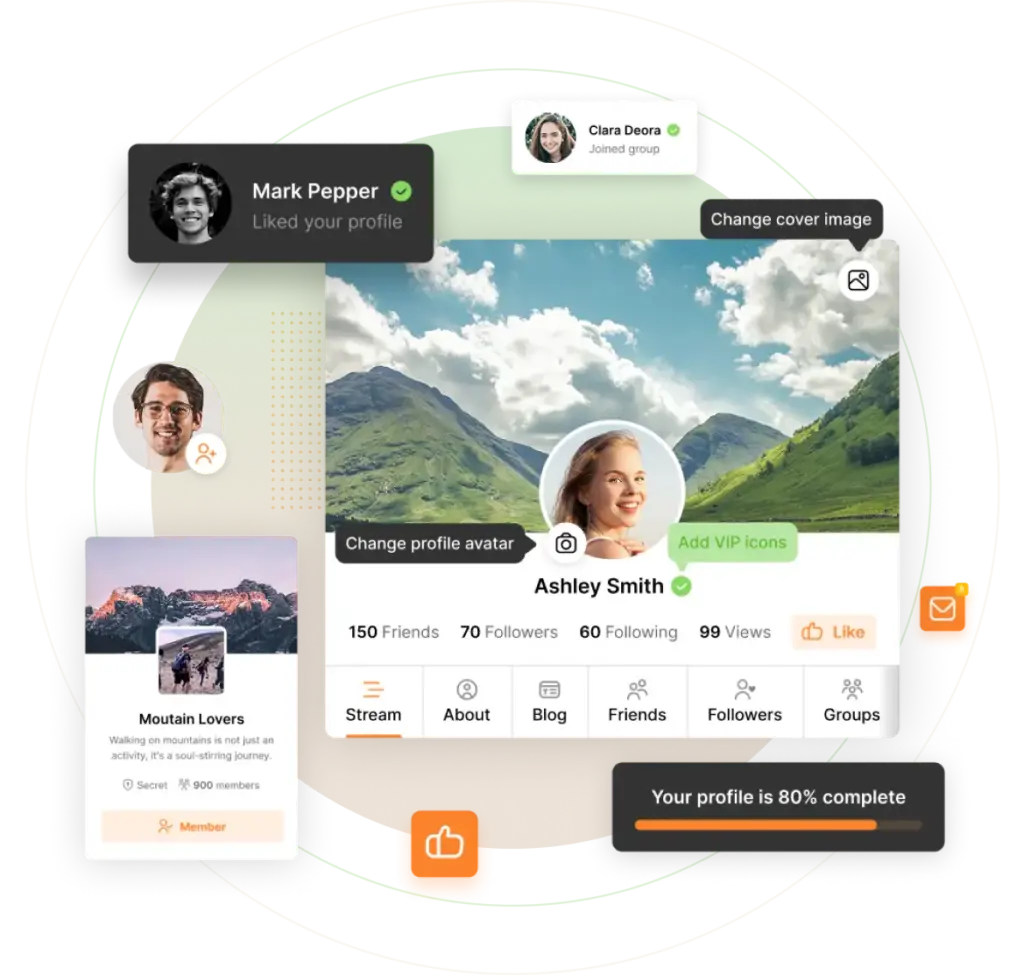
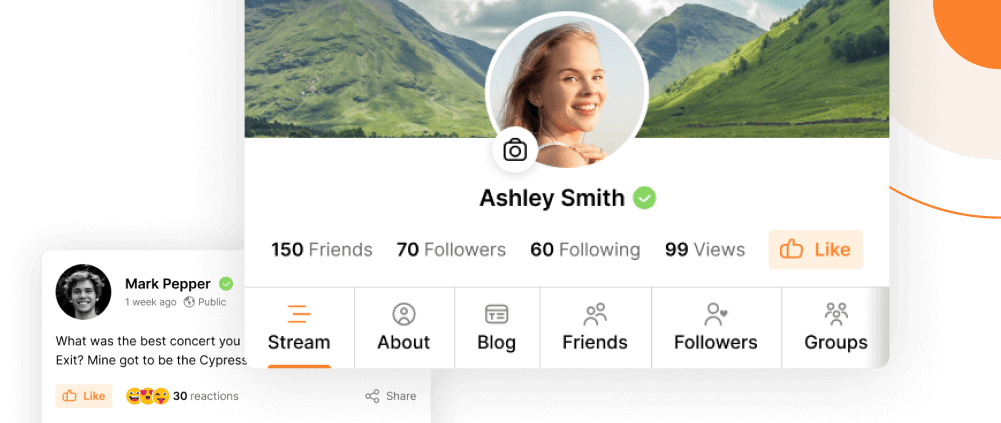
With PeepSo, site owners can turn a WordPress website into a private social network with member profiles, activity streams, groups, pages, media, notifications, and private messaging. The community becomes part of the owned website, not an isolated space controlled by another platform.
Start With a Community Idea That Has a Clear Reason to Exist
A strong community begins with a specific reason for people to gather.
“People interested in fitness” is too broad. “Busy parents training for their first 5K” is much stronger. “Entrepreneurs” is vague. “Course creators building their first paid membership site” creates a clearer identity.
The best community ideas usually sit at the intersection of identity, problem, and progress. Members should know who the community is for, what they are trying to solve, and what kind of progress they can expect by participating.
For creators and membership site owners, this clarity makes content planning easier. It also helps members understand how to contribute. When the purpose is clear, people do not feel like they are posting into a random feed. They feel like they are joining a shared journey.
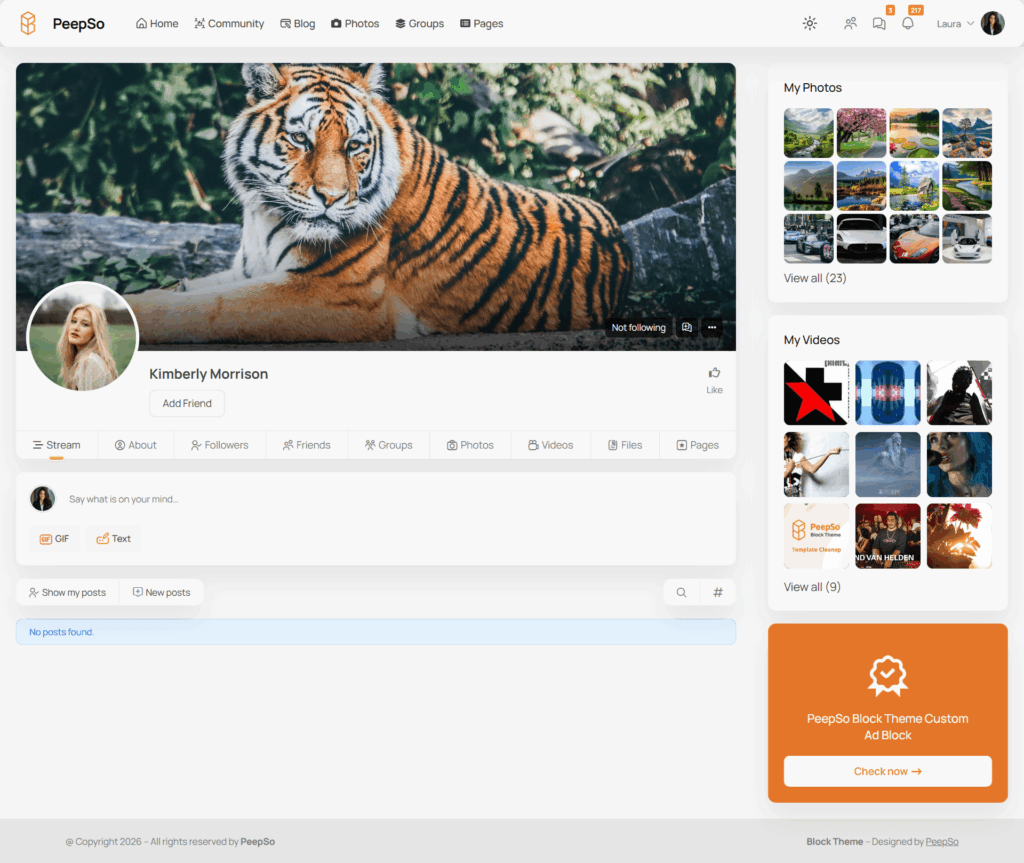
A WordPress community powered by PeepSo gives that idea a home. The activity stream can support daily conversations. Groups can organize specific topics. Member profiles help people recognize each other. Pages can give brands, instructors, partners, or community leaders a dedicated presence inside the network.
Define the Member Promise Before Choosing Features
Features do not create community by themselves. They support the promise made to members.
A course builder might promise peer support, accountability, and access to practical discussions around each lesson. A membership site might promise exclusive conversations, expert guidance, and member networking. A product brand might promise customer connection, product education, and early feedback opportunities.
The member promise should answer a simple question: “What becomes easier, better, or more valuable when someone joins?”
Once that answer is clear, the platform setup becomes more intentional.
With PeepSo, a creator can build a learning community around LearnDash or Tutor LMS. An eCommerce brand can connect community activity with WooCommerce. A local network can use WP Event Manager to bring online conversations into real-world meetups. A publisher can use Advanced Ads to monetize attention without pushing members away to a third-party platform.
The goal is not to activate every feature at once. The goal is to choose the features that support the member promise.
Choose an Owned Platform Instead of Building on Rented Land
Many communities begin on social platforms because they are familiar. Facebook Groups can work for early testing. Discord can work for fast chat. Hosted community platforms can reduce setup decisions.
The downside appears later.
Algorithms can limit visibility. Members get distracted by unrelated content. Branding is restricted. Data access is limited. Monetization depends on platform rules. Search visibility is weak because most conversations are locked away from the public web.
A WordPress-based community gives site owners a different path. The website remains the central hub. Content, commerce, courses, memberships, events, and community can work together.
PeepSo is especially practical because it adds social networking features directly to WordPress. Instead of sending members to a separate platform, site owners can build the community experience inside their own domain. That creates stronger brand consistency and a more connected customer journey.
For a course business, students can move from lessons into discussions. For a membership site, members can join topic-based groups. For an eCommerce store, customers can share product experiences and ask questions. For a creator, followers can become members of a private network that is not dependent on social media reach.
Build the Foundation Before Launching Publicly
A community launch should not begin with an empty space.
Before inviting members, create the foundation. Set up the main community areas. Publish starter conversations. Create member profile fields that help people introduce themselves. Decide which groups should exist from day one. Prepare a welcome flow that guides new members toward their first action.
With PeepSo, the foundation can include a main activity stream, member profiles, focused groups, pages for brands or community leaders, notifications, messaging, and media sharing. These features give members familiar social tools while keeping the experience inside WordPress.
A practical first setup might include a general community stream, a welcome group, a support or questions group, and one or two topic-specific groups. For a course community, each main course or learning track could have its own group. For a membership business, groups can reflect member interests, experience levels, or goals.
The early structure should feel useful without feeling overwhelming. Too many empty groups make the community look inactive. A smaller number of active spaces creates momentum.
Create a Welcome Experience That Leads to Participation
New members need direction.
When someone joins a community, they are often unsure what to do first. They may not know where to post, how active the group is, or whether their contribution is welcome. A strong onboarding experience removes that hesitation.
The first goal is not to make members consume more content. The first goal is to help them participate.
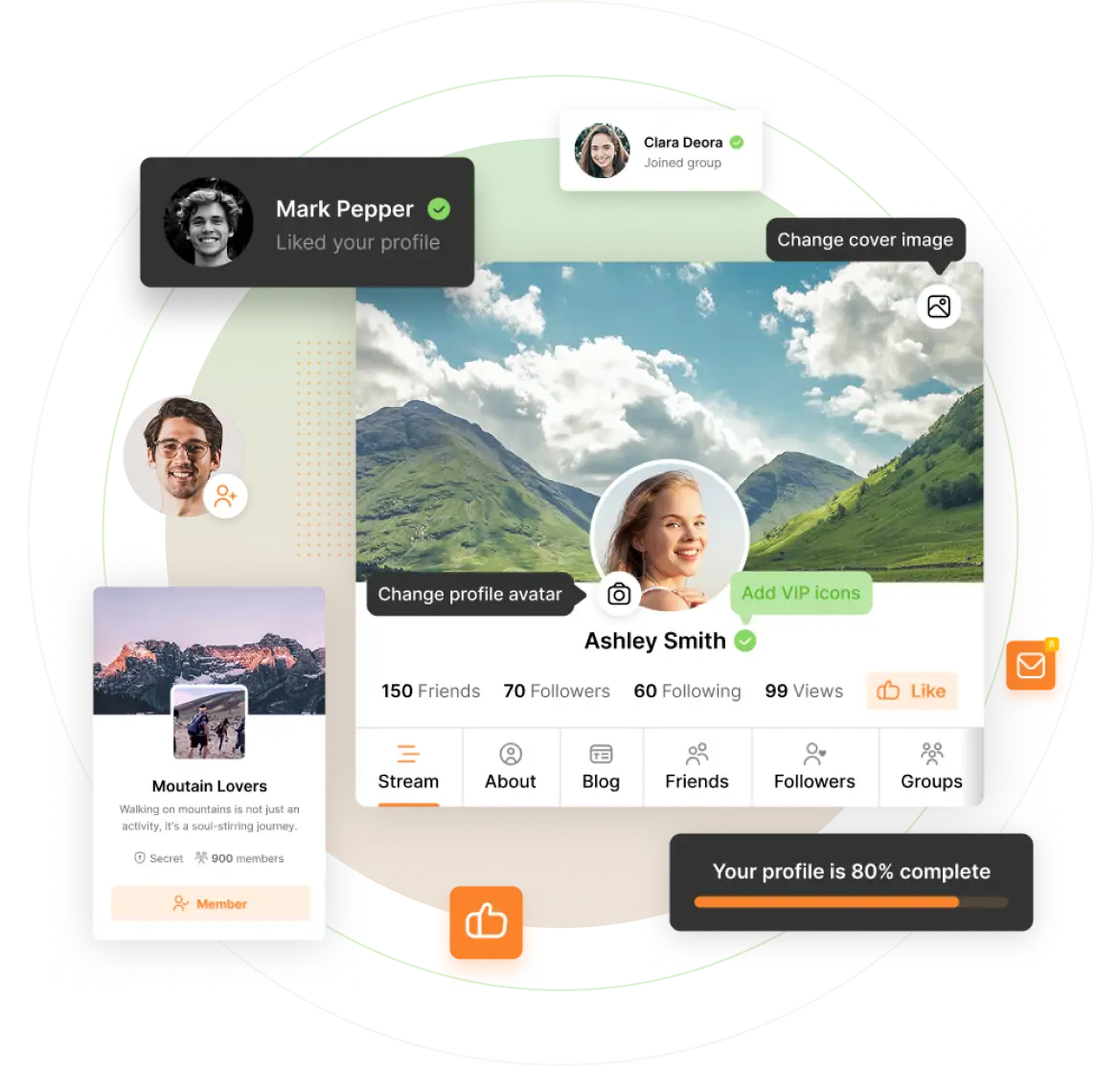
A welcome post can explain the purpose of the community. A pinned discussion can invite introductions. Profile fields can encourage members to share their background, goals, location, or area of interest. Notifications can bring members back when someone replies. Private messaging can help relationships move beyond public posts.
PeepSo supports this kind of onboarding through member profiles, activity stream posts, groups, notifications, and messaging. The result is a community where people can quickly understand who is present, what is happening, and how to join the conversation.
A strong first action might be simple: introduce yourself, reply to one discussion, upload a profile photo, join a relevant group, or ask a question. The easier the first action feels, the more likely members are to return.
Design Community Roles Before Growth Begins
Every thriving network needs more than members. It needs roles.
Some people will ask questions. Others will answer. Some will create resources. Others will welcome newcomers. Some will organize events, lead subgroups, or moderate discussions.
Defining these roles early makes the community stronger as it grows.
For example, a course community may have instructors, student mentors, alumni, and new learners. A product community may have customers, support staff, ambassadors, and partners. A professional network may have beginners, experts, event hosts, and group leaders.
PeepSo gives site owners the structure to support these roles inside WordPress. Member profiles help people understand each other’s background. Groups create smaller spaces for focused interaction. Pages can represent businesses, organizations, projects, or public-facing community entities. Messaging helps members and leaders connect directly.
The strongest communities make members feel seen. Roles help create that feeling because people understand where they fit and how they can contribute.
Plan Conversations Instead of Hoping They Happen
A quiet community is rarely a sign that people do not care. More often, members need better conversation design.
Good community conversations are specific, easy to answer, and connected to the member’s goals. Vague updates usually get ignored. Clear discussion starters create movement.
A strong post might ask members to share one challenge they are facing this week. Another could invite them to post a recent win. A course creator might ask students to share how they applied a lesson. A membership owner might start a weekly thread around tools, resources, or progress.
The PeepSo activity stream is useful for these recurring conversations because it gives members a familiar place to post, reply, react, and follow updates. Groups can support deeper discussions around specific themes. Notifications help bring members back when conversations continue.
The key is rhythm. Communities grow through repeatable habits, not random bursts of activity.
A weekly welcome post, a midweek question, a resource thread, and a member spotlight can create a simple engagement cycle. Over time, members begin to recognize the rhythm and participate more naturally.
Use Groups to Create Smaller Rooms Inside the Network
Large communities can feel intimidating.
As more members join, one central feed may become too broad. New members may hesitate to post because they are unsure whether their question fits. Experienced members may lose interest if every discussion is aimed at beginners.
Groups solve this problem by creating smaller rooms inside the larger network.
With PeepSo Groups, site owners can organize conversations by topic, course, membership tier, location, interest, project, or customer segment. This gives members a clearer place to participate. It also helps community managers keep discussions relevant.
A creator teaching online business might create groups for beginners, advanced members, accountability partners, and live workshop attendees. A fitness coach might organize groups by training goals. A nonprofit might use groups for volunteers, donors, local chapters, and event teams.
Groups also give members a sense of belonging inside the larger community. That smaller connection can be the difference between passive membership and active participation.
Add Media to Make the Community Feel Alive
Text discussions are valuable, but media often makes a community feel more human.
Photos, videos, audio, and file uploads can bring member stories to life. A student can share a project result. A customer can post a product photo. A coach can upload a short walkthrough. A community manager can share event highlights.
PeepSo supports media-rich interaction, which helps communities move beyond plain discussion threads. This is especially useful for visual niches, learning communities, creative memberships, fitness groups, product communities, and event-based networks.
Media also increases emotional connection. Members are more likely to remember people when they see faces, work samples, projects, and real-world progress.

PeepSo Power Suite
Connect the Community to Revenue Without Breaking Trust
A community can support business growth, but monetization must feel natural.
Members should not feel like every conversation is a sales opportunity. Revenue works best when it is connected to genuine value. That value might come from paid memberships, courses, events, premium groups, digital products, sponsorships, advertising, or eCommerce.
WordPress gives site owners flexibility here, and PeepSo fits into that ecosystem. WooCommerce can support product sales. LearnDash and Tutor LMS can support learning communities. Paid Memberships Pro can support gated access. WP Event Manager can connect community engagement with events. Advanced Ads can support advertising models.
This is where WordPress ownership becomes powerful. Instead of forcing the community into one platform’s monetization system, site owners can combine the tools that fit their business model.
A course builder can create student groups around lessons. A membership site can offer private community access as part of a paid plan. A marketplace can help vendors build relationships with customers. A publisher can grow a niche network and monetize through carefully placed ads.
The best revenue strategy strengthens the community experience rather than interrupting it.
Build Engagement Loops That Bring Members Back
Communities grow when members return.
A member posts a question. Someone replies. A notification brings the member back. The member responds again. Another person joins the discussion. A relationship begins.
That loop is simple, but it is the heartbeat of community engagement.
PeepSo supports this through activity streams, notifications, comments, messaging, and group interactions. These features make it easier for members to see what changed since their last visit and continue conversations that matter to them.
Engagement loops can also be designed around recurring activities. Weekly challenges, live event follow-ups, member introductions, product feedback threads, course lesson discussions, and community announcements all create reasons to return.
The most effective communities do not rely on constant new content from the site owner. They create conditions where members contribute to the value of the network.
Moderate for Safety, Quality, and Momentum
A community needs boundaries.
Clear guidelines protect the member experience. They help prevent spam, reduce confusion, and give moderators a standard for decision-making. Without moderation, valuable members may leave because the space feels noisy, unsafe, or low quality.
Moderation should not feel heavy-handed. It should feel like care.
Set expectations around respectful discussion, self-promotion, support requests, private messaging, and group purpose. Make it easy for members to understand what belongs where. Encourage helpful replies and discourage behavior that weakens trust.
With PeepSo, site owners can keep the community inside WordPress while shaping the experience around their own standards. This is a major advantage over public social platforms where community owners must work within someone else’s rules and interface.
The goal is not control for its own sake. The goal is to create a space where members feel confident participating.
Measure the Right Signs of Community Health
A thriving network is not measured only by member count.
A large inactive community is not stronger than a smaller active one. The better signals are participation, return visits, replies, introductions, group activity, direct interactions, and member-generated posts.
Useful questions include whether new members are taking a first action, whether posts receive replies, whether members are helping each other, and whether groups remain active after launch. For a business community, it also helps to watch how community participation supports course completion, membership retention, event attendance, product feedback, or customer loyalty.
PeepSo gives site owners the community layer inside WordPress, which means the community can be evaluated alongside the broader website strategy. That connection is difficult to achieve when the community lives entirely on a third-party platform.
Growth should be intentional. More members are valuable only when the experience remains clear, useful, and welcoming.
Turn Early Members Into Community Advocates
The first active members are more than participants. They are the beginning of the culture.
Early members show others how to behave. If they ask thoughtful questions, welcome newcomers, share progress, and reply generously, new members are more likely to do the same.
Community owners can support this by recognizing helpful members, inviting them into leadership roles, and giving them spaces to contribute. A member who answers questions might become a mentor. A customer who shares useful product ideas might become an ambassador. A student who completes a course might help guide new learners.
PeepSo profiles, groups, pages, notifications, and messaging all support these relationship layers. Members can become known inside the network, not just counted in a database.
The strongest communities do not depend entirely on the founder. They develop internal energy.
Prepare the Community for Long-Term Growth
A community that works for 50 members may need a stronger structure at 500.
As activity grows, revisit the group structure. Consolidate inactive spaces. Create new groups only when there is clear demand. Refresh onboarding content. Review moderation guidelines. Add events, courses, paid tiers, or partner pages when they support the member promise.
This is another reason WordPress is a strong foundation. A community can grow into a larger digital ecosystem. Content marketing, SEO, eCommerce, online courses, memberships, events, advertising, and community can all support each other.
With PeepSo, the social network remains connected to that ecosystem. Site owners are not forced to choose between a website and a community. They can build both into one owned platform.
That ownership compounds over time. Conversations, member relationships, content, and business value stay connected to the brand’s own domain.
Conclusion
A thriving community is not built by opening a group and hoping people talk.
It begins with a clear purpose, a strong member promise, thoughtful structure, and a platform that supports real participation. The community needs places for public conversation, private connection, focused groups, member identity, media sharing, notifications, and long-term growth.
For WordPress site owners, PeepSo offers a practical way to build that network without giving control to a rented platform. It brings social networking features into WordPress, connects naturally with tools such as WooCommerce, LearnDash, Tutor LMS, Paid Memberships Pro, WP Event Manager, and Advanced Ads, and gives creators the freedom to shape the community around their own business model.
The path from idea to thriving network is not instant. It is built through clear positioning, useful conversations, smart onboarding, healthy moderation, and consistent member value.
With the right playbook and the right WordPress community platform, a simple idea can become a network people return to, contribute to, and trust.

Reactions & comments
Comments