

Facebook Groups are often the first place people build a community because setup is fast, membership feels familiar, and Facebook still has enormous built-in reach. Meta said in October 2024 that almost 1.8 billion people use Facebook Groups every month and that there are 25 million monthly active public groups. At the same time, tools like PeepSo let website owners build a full private social network inside WordPress with member profiles, groups, activity streams, chat, notifications, and integrations for courses and commerce.
The real decision is not simply where members can post comments. It is whether you want to build your community on borrowed space or on an asset you actually control. For hobby discussions, Facebook Groups can be enough. For creators, membership sites, course businesses, associations, and brands, a private community website usually becomes the stronger long-term choice.
Why this topic matters
A community is no longer just a conversation channel. For many businesses, it is part of the customer journey. It helps people discover your brand, join discussions, ask for support, connect with other members, and eventually buy, renew, or recommend your products. When the community lives on your own website, it can become part of a larger system that includes your blog, sales pages, checkout flow, onboarding, email automation, and member-only resources.
The problem with relying entirely on Facebook is that the platform controls discovery, moderation tools, interface changes, and feature rollouts. Meta continues to update how Groups are surfaced inside Facebook through tabs like Local and Explore, and it has also tested AI features that summarize public group discussions and help members find answers. Those updates can be useful, but they also show that your community experience sits inside Meta’s product strategy, not your own.
What Facebook Groups do well
Fast setup and low friction
Facebook Groups are easy to launch. People already know the interface, many already have accounts, and the barrier to entry is low. Meta supports both public and private groups. Public groups are searchable and their content is publicly visible, while private groups limit content visibility to members. That flexibility is one reason Facebook remains attractive for early-stage communities.
Discovery is built in
Facebook’s biggest strength is still distribution. Meta has continued to invest in ways for people to discover groups through product surfaces such as Local, Explore, and feed recommendations. For a local interest community, neighborhood group, or broad-topic discussion space, that reach can be valuable because people may find your group without knowing your brand first.
Admin tools are mature
Facebook has also spent years improving moderation and admin workflows. Meta’s Admin Home and Admin Assist tools help moderators review posts, manage members, automatically decline certain promotional content, and spot potentially unhealthy conversations. For admins who need quick moderation without maintaining their own website stack, those tools are genuinely useful.
So there is a clear case for Facebook Groups. They are good for quick community starts, informal engagement, and top-of-funnel visibility. That is especially true when your main goal is exposure rather than ownership.
Where Facebook Groups fall short
You do not own the platform
The main weakness is control. Your community may feel active, but it still lives inside someone else’s ecosystem. Meta can change features, change distribution patterns, and retire products that some communities depend on. One clear example is Community Chats. Meta updated that product in September 2025 to say chats would be paused and then permanently deleted, while directing users to download messages and consider alternatives. That is a reminder that platform features can change even after communities build habits around them.
Meta also introduced a November 2025 update that lets admins convert private groups to public, with a three-day review window and special handling for older content and member lists. That update may help some admins, but it also underlines the larger reality: privacy settings, member visibility, and discovery rules are governed by Meta, not by the community owner.
Branding is limited
A Facebook Group always looks and feels like Facebook. Your logo may appear, but the overall interface, navigation, attention flow, and surrounding recommendations belong to Meta. Your members are still inside an environment designed to keep them on Facebook, not inside an experience designed around your brand. If your goal is to build a premium membership, a course community, or a branded customer hub, that limitation becomes an issue.
Data and search visibility are weaker
A private community website gives you far more control over what is public, what is members-only, and what can be found through search. Google’s documentation makes it clear that publicly accessible pages can be crawled and indexed, while password-protected or intentionally blocked content can be kept out of search. In practical terms, that means your website can have public landing pages, SEO articles, member directories, or teaser content that attracts new visitors, while private discussions remain private. A private Facebook Group does not give you that level of search and architecture control.
Monetization and integration are awkward
Facebook Groups can support community interaction, but they are not ideal as the center of a paid business model. If you run courses, memberships, paid coaching, ecommerce, or a niche network, you usually need tighter connections between content, purchases, access rules, and member experience. That is where private community websites have a major advantage.
What a private community website gives you
Full ownership of the experience
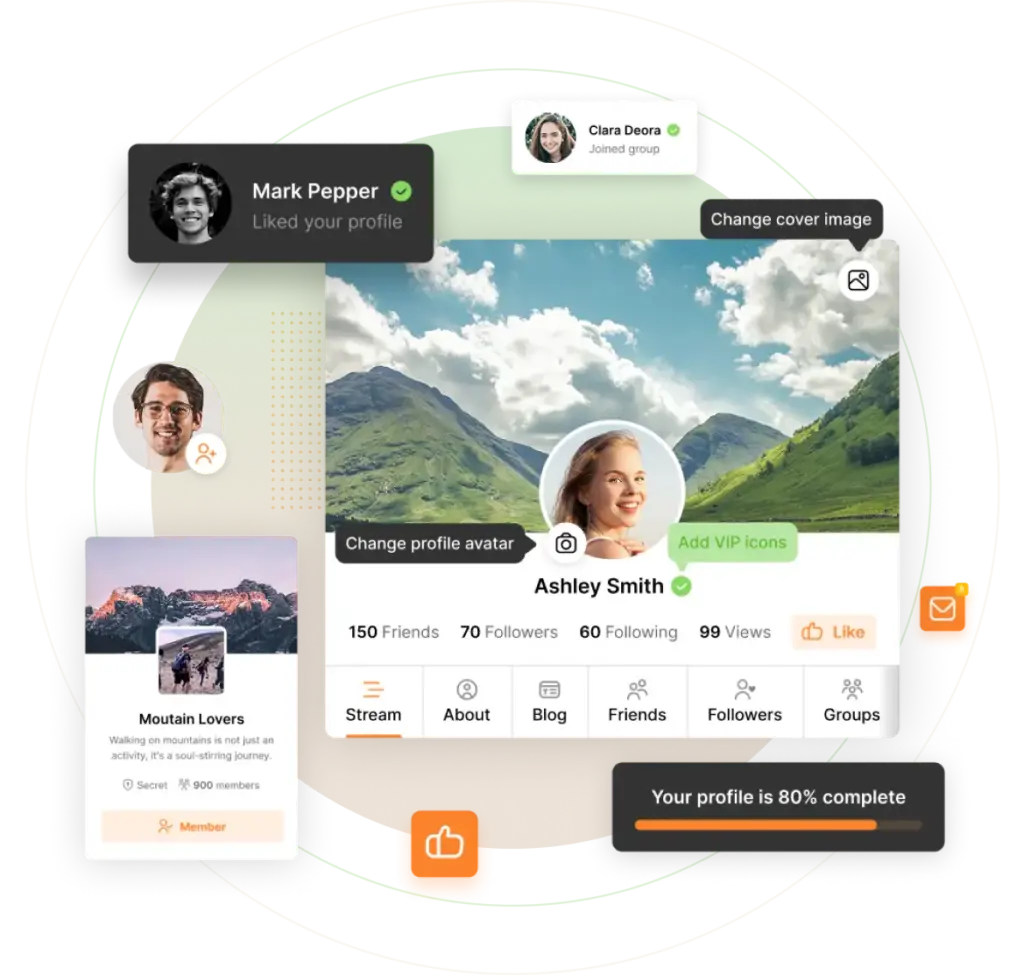
A private community website puts the community on your domain, inside your design system, and within your own business workflow. PeepSo is built specifically for this use case. It works as a WordPress plugin for private social networks and community websites, with user profiles, groups, pages, activity streams, chat, notifications, and monetization options.
Your community stops being a side channel and becomes part of your actual product. Your homepage can lead into your community. Your blog can feed into member discussions. Your checkout can unlock access automatically. Your onboarding can guide people into the right groups on day one.
Better member identity and stronger relationships
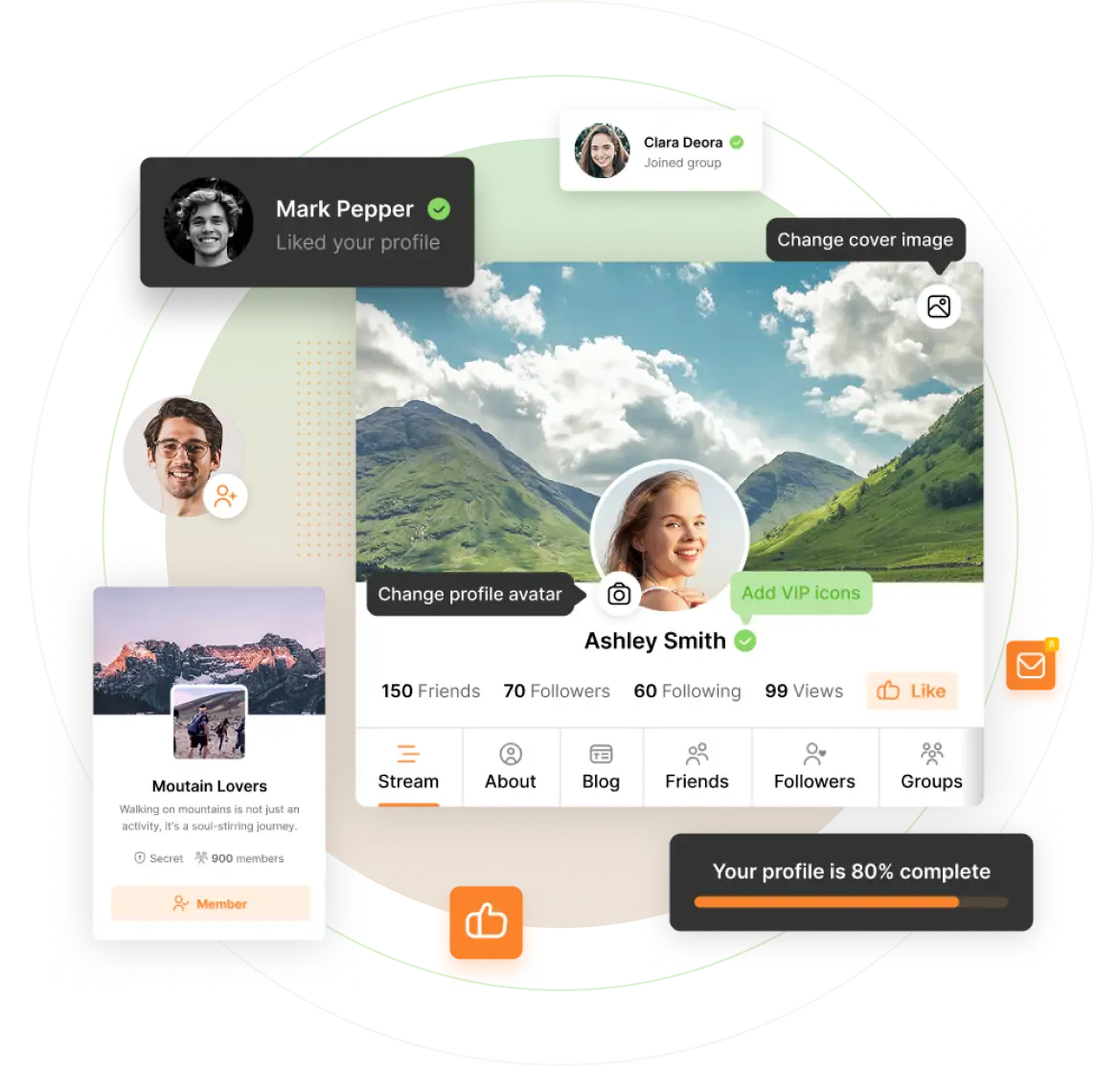
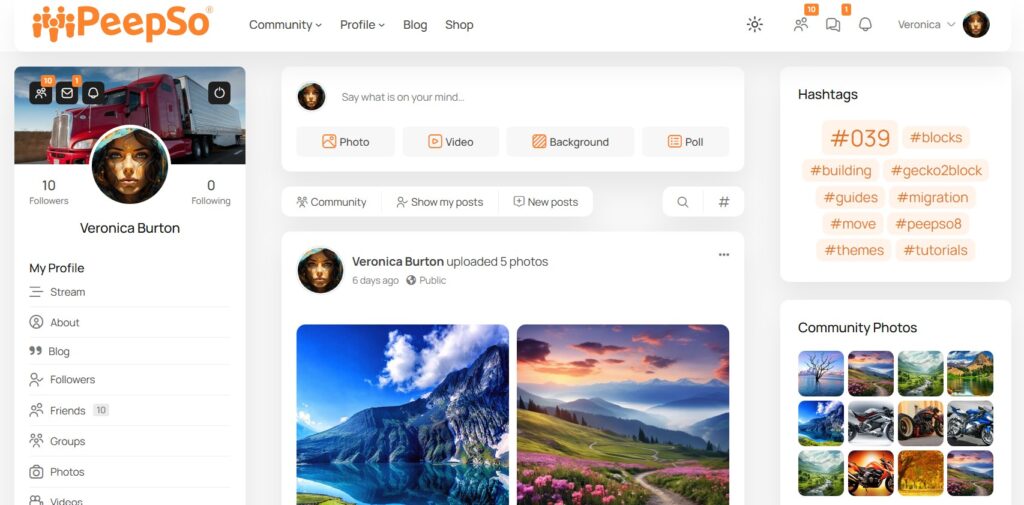
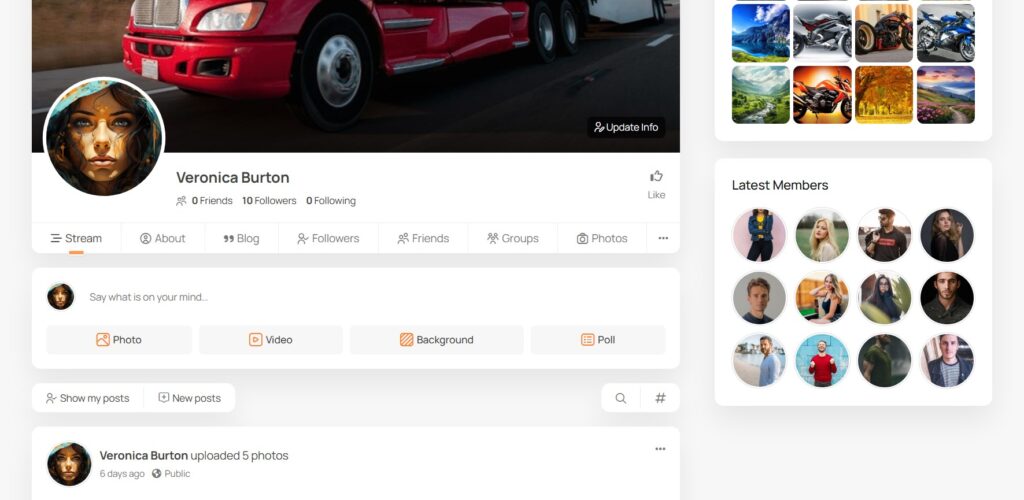
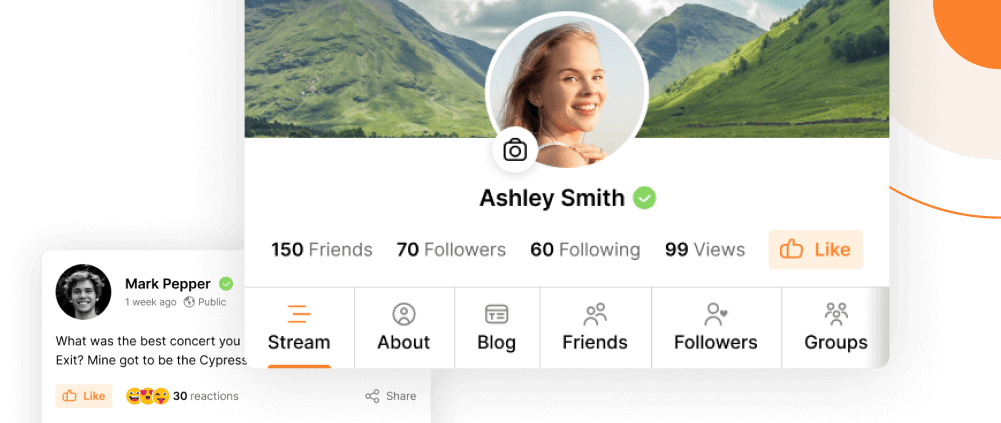
On a private community website, members are not just profile pictures in a feed. They can have richer profiles, custom fields, group participation, messaging, notifications, and a more intentional sense of place. PeepSo’s activity stream supports posting on profiles, groups, and the main community stream. Its platform also includes customizable profiles, groups, real-time chat, live notifications, polls, file sharing, photos, albums, hashtags, and follower relationships.
That feature set makes a private community website feel less like a comment thread and more like a real member network. It is especially useful when you want to build deeper retention over time, because members can form identity around the community itself rather than around a Facebook account.
A stronger fit for memberships, courses, and commerce
This is where private community websites usually pull ahead. PeepSo integrates with LearnDash and TutorLMS for e-learning, and with WooCommerce and Dokan for ecommerce use cases. PeepSo also supports paid community scenarios through membership-related integrations and group access control. That means the community can sit directly beside your courses, subscriptions, store, or member plans instead of living on a disconnected social platform.
For course builders, this makes an immediate difference. The course, the lesson comments, the student groups, the announcements, and the private messaging can live in one environment. For ecommerce brands, product conversations and customer groups can happen right next to the store. For membership sites, access can be tied to actual plans instead of manual approvals inside Facebook.
Better long-term SEO and content strategy
A website-based community fits better with search-driven growth. Public pages on your site can rank in search. Your blog can answer questions people are already searching for. Your landing pages can introduce the value of the community. Google’s documentation makes it clear that site owners can choose what should be indexable and what should stay behind login or paywall barriers. That level of control is hard to match on a third-party social platform.
This does not mean every community discussion should be public. It means you can design the right mix. Public content brings people in. Private areas create exclusivity and member value. That combination is often the best long-term model for sustainable growth.

PeepSo Power Suite
Which option is better for different goals?
If you want casual reach, light moderation, and fast community launch, Facebook Groups still make sense. They are especially useful for local communities, broad-interest groups, and audience discovery. Public groups benefit from Facebook’s recommendation systems and internal discovery surfaces.
If you want a branded member experience, paid access, richer profiles, direct integrations, and long-term control, a private community website is the better choice. That is particularly true for creators, course businesses, coaches, paid memberships, customer communities, and any brand that wants the community to become part of its product ecosystem rather than just a conversation channel. PeepSo is a strong practical option here because it gives WordPress site owners the core social features people expect without forcing the community to live on a third-party platform.
For many businesses, the best answer is a hybrid strategy. Use Facebook Groups for discovery and initial audience contact. Use your private community website for retention, deeper engagement, onboarding, and monetization. Facebook can help people find you. Your website is where they should build lasting connection with your brand.
A practical strategy that works
Start with your website as the home base
Build the central member experience on your own site first. That includes your welcome pages, onboarding flow, member profiles, topic groups, and private messaging. This creates a stable foundation that you control.
Use Facebook as a feeder channel, not the headquarters
A Facebook Group can still be useful, but it should support the community, not define it. Use it to spark interest, share highlights, and direct serious members toward your website. This works well because Facebook is strong at visibility, while your own site is stronger at structure and ownership.
Move your most valuable interactions onto owned infrastructure
Store your best discussions, premium areas, member resources, and relationship-building features on your own platform. PeepSo supports the activity stream, profiles, groups, chat, and notifications that make this transition realistic for WordPress site owners.
Build around the member journey
Think beyond posting. Ask what should happen when a new member joins, finishes a course, upgrades a membership, or returns after a period of inactivity. A private community website lets you connect those stages in a way Facebook Groups generally cannot.
Conclusion
Facebook Groups are still useful. They are familiar, easy to join, and strong for discovery. If your goal is quick growth or casual discussion, they can work well.
But if your goal is to build a real business asset, a branded member experience, or a durable community you actually control, a private community website is the smarter long-term move. You gain ownership, better search strategy, stronger integrations, and a more intentional member experience. For WordPress users, PeepSo stands out as the best practical solution because it brings together the social features people expect from modern communities while keeping the platform under your control.

Reactions & comments
Comments