

Building an online community takes time, energy, trust, and consistency. Members do not return because a platform exists. They return because the community gives them value. That value may come from conversations, expert access, education, networking, exclusive content, events, support, or shared identity. Once a community has real engagement, monetization becomes a natural next step.
The challenge is choosing the right model without damaging trust. A community should not feel like a constant sales pitch. Members need to feel that paid offers improve the experience, not interrupt it. That is where owning the community platform becomes a major advantage.
Platforms like Facebook Groups, Discord, Circle, Mighty Networks, BuddyPress, and BuddyBoss can help people gather online, but each option comes with tradeoffs. Some limit ownership. Some control visibility. Some create pricing pressure. Some add complexity. Others keep the community disconnected from the main website.
PeepSo gives WordPress site owners a practical way to build, manage, and monetize a community directly on their own website. With activity streams, member profiles, groups, pages, media, notifications, and messaging, PeepSo turns a WordPress site into a community platform that can support real business goals.
Monetization Starts With Ownership
The most valuable online communities are built on trust and control. When a community lives only on a third-party platform, the business depends on someone else’s rules. A change in reach, pricing, moderation tools, group visibility, or account access can affect the entire audience.
A WordPress community built with PeepSo gives site owners more control over the member experience. The community becomes part of the website, not a separate island. That opens the door to better monetization.
Creators can connect community activity with courses, products, events, advertising, paid memberships, premium groups, and customer relationships. Entrepreneurs can design a complete member journey from discovery to registration, engagement, purchase, renewal, and advocacy. The result is a stronger business asset.
Choose a Monetization Model That Fits the Community
Not every online community should make money in the same way. A coaching community may work best with paid memberships. A course community may use student access groups. A local business community may benefit from events and sponsorships. A creator community may combine exclusive content, digital products, and premium discussions.
The right model depends on what members already value. A strong monetization strategy starts by answering a simple question: what would members gladly pay for because it helps them get better results? That answer usually falls into a few practical categories.
Paid Memberships
Paid memberships are one of the clearest ways to monetize an online community. Members pay for access to a private space, premium discussions, expert support, exclusive resources, or a more focused environment. This works especially well when the community helps people solve a valuable problem.
Examples include fitness coaching, business mentoring, professional networking, course support, hobby groups, creator communities, and private customer communities.
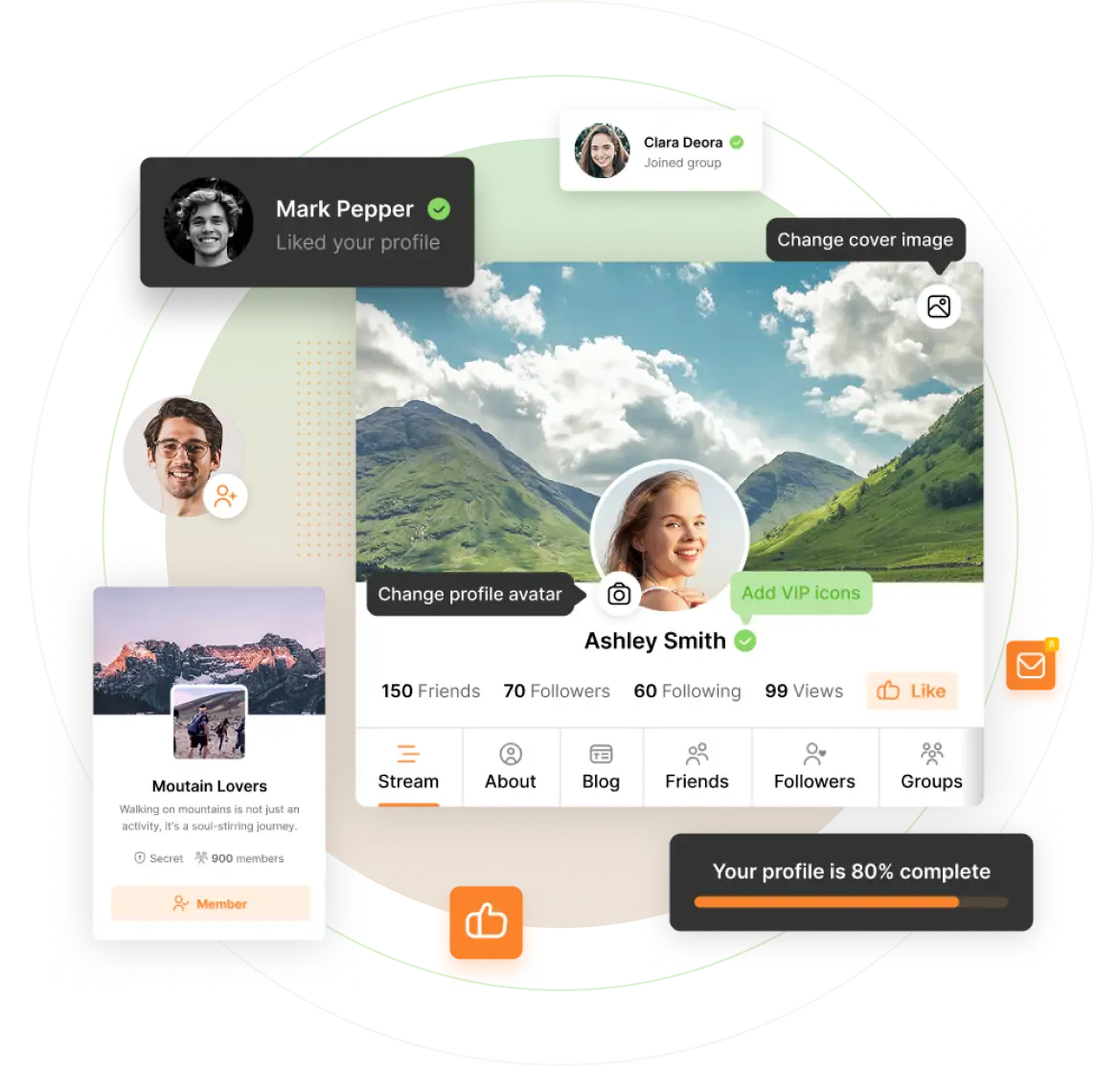
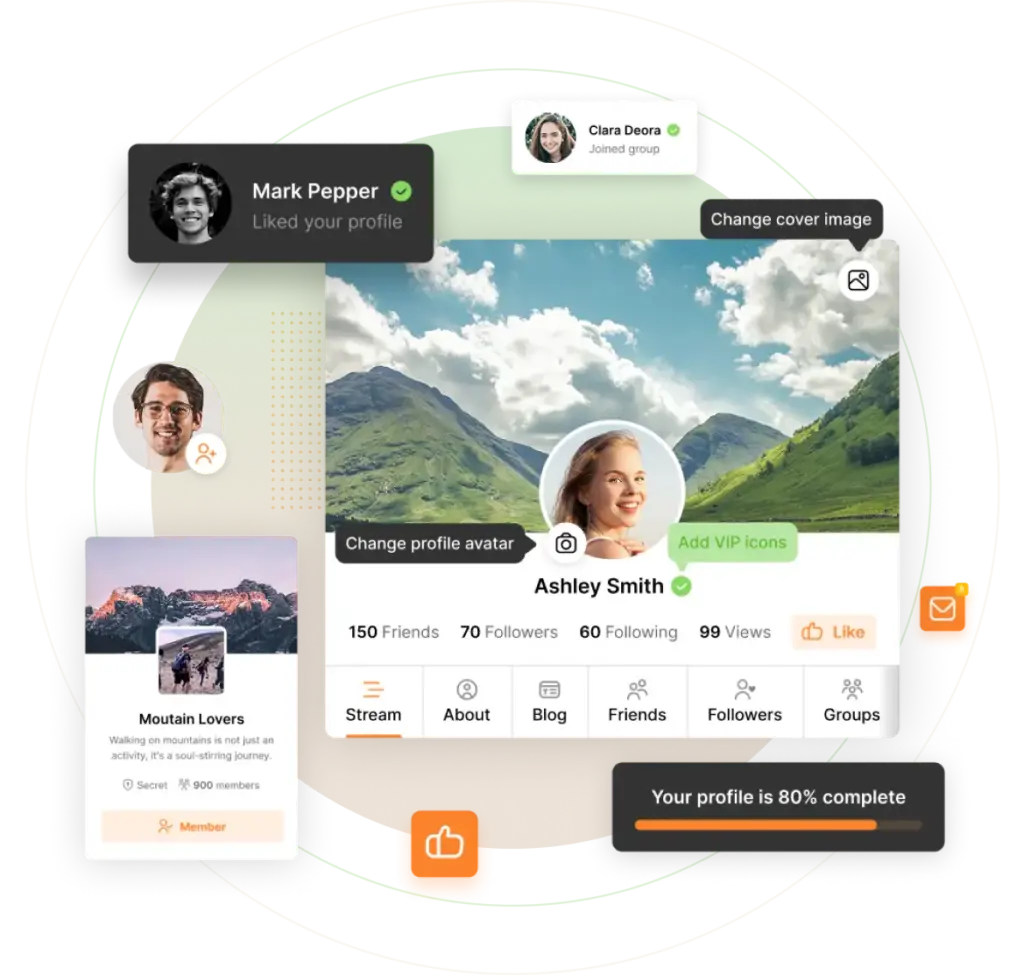
With PeepSo, a WordPress site can host the community experience directly. Members can create profiles, post updates, reply to conversations, join groups, receive notifications, and connect through messaging.
Paid access can be structured around the website’s membership setup. This gives site owners flexibility when building free, paid, and premium community areas.
A free public community can attract new members. A paid private group can deliver deeper value. A higher-tier group can include coaching, live sessions, templates, resources, or private access.
That structure helps monetize without forcing every visitor to pay immediately.
Online Courses and Learning Communities
Courses are easier to sell when learners are not left alone after purchase. Many students buy a course but struggle to finish it because they lack accountability, support, and interaction. A learning community solves that problem by giving students a place to ask questions, share progress, celebrate wins, and learn from others.
WordPress site owners can connect PeepSo with learning tools such as LearnDash to create a stronger learning experience. Instead of sending students to a separate Facebook Group or Discord server, the course community can live inside the same website as the course content.
That creates a cleaner experience. Students log in, access lessons, join discussions, view updates, connect with other learners, and stay inside the creator’s ecosystem.
For course builders, this can increase completion, improve student satisfaction, and create more reasons for members to renew.
Sell Digital Products and Community Access Together
Digital products are often stronger when paired with community access.
Templates, guides, workshops, downloads, checklists, recorded sessions, and resource libraries can all become more valuable when members can discuss them with others.
A WordPress site can sell digital products through WooCommerce and support the customer experience with PeepSo community features.
For example, a creator might sell a business planning toolkit and include access to a private implementation group. A fitness coach might sell a nutrition plan and include a support community. A photographer might sell presets and include a members-only group for editing feedback.
The product creates the first purchase.
The community creates the ongoing relationship.
That relationship can lead to renewals, upsells, referrals, and future launches.
Events, Workshops, and Paid Sessions
Events are a practical way to monetize a community without relying only on recurring subscriptions.
A community can host paid workshops, expert sessions, networking events, live Q&A sessions, challenges, retreats, webinars, or local meetups.
With WordPress, tools such as WP Event Manager can support event listings and registrations, while PeepSo keeps members engaged before and after the event.
The event itself may last one hour. The community around it can continue for weeks.
Members can introduce themselves, share takeaways, ask follow-up questions, post photos or videos, and stay connected for the next session.
That extended engagement makes events feel more valuable.
It also gives site owners more opportunities to promote future paid sessions naturally.
Advertising and Sponsored Content
Advertising can work well in online communities, but it needs to be handled carefully.
Members join communities for connection and value. Too many ads can damage the experience. The best approach is to keep advertising relevant, limited, and aligned with member interests.
A WordPress-based community gives site owners more control over ad placement than most closed platforms.
With PeepSo and WordPress advertising tools such as Advanced Ads, community owners can create advertising opportunities inside their own website environment.
This can work especially well for niche communities.
A photography community can attract camera brands, editing software, or print services. A fitness community can work with equipment providers or healthy meal companies. A business community can promote software, events, or professional services.
The key is relevance.
Sponsored placements should feel useful rather than random. A well-matched sponsor can support the community while giving members access to products or services they already care about.
Sponsorship Packages
Sponsorships are different from standard ads.
A sponsor may pay for visibility, content collaboration, event support, resource placement, newsletter mentions, or branded discussions.
This model can work well when the community has a clear niche and active members.
A professional community with 2,000 engaged members may be more valuable to a sponsor than a general audience of 50,000 passive followers.
Owning the platform gives the community owner more flexibility. Sponsor visibility can be placed across landing pages, group areas, event pages, resource hubs, and community updates.
With PeepSo, the community experience remains connected to WordPress, making it easier to design sponsorship packages around the website as a whole.
Premium Content and Resource Libraries
Many communities monetize by offering exclusive content.
This can include expert interviews, tutorials, templates, research summaries, guides, downloadable files, videos, private posts, or member-only announcements.
PeepSo supports the social side of the experience by giving members a place to talk about the content, ask questions, and share how they are using it.
That interaction is important.
A resource library alone can become static. A resource library connected to a community becomes active. Members can discuss what works, request new materials, and help each other apply what they learn.
This creates a feedback loop.
The community shows what members need next. The site owner can create new content based on real demand. Paid members see ongoing value because the offer keeps improving.
Coaching, Consulting, and Expert Access
A community can become a powerful lead generation engine for coaching and consulting.
Members often join because they want help solving a problem. Over time, they begin to recognize the site owner’s expertise. That trust can lead to paid coaching, consulting packages, group programs, audits, or strategy sessions.
The community does not need to sell aggressively.
Useful conversations, thoughtful replies, helpful resources, and consistent presence can do much of the work.
PeepSo helps support this by keeping member profiles, discussions, messaging, and groups inside the WordPress site. The community becomes a place where expertise is visible.
A consultant might use public discussions to answer general questions and offer paid sessions for deeper help. A creator might run a free group and invite active members into a paid mastermind. A coach might use private groups to support clients between sessions.
That structure makes monetization feel like a natural extension of the relationship.
Community-Based Customer Support
Not every community monetizes through direct member payments.
For product businesses, agencies, SaaS companies, and course creators, a community can reduce support costs and improve customer retention.
Members can ask questions, search past discussions, share solutions, and learn from each other. The business can respond publicly when appropriate, which helps more than one customer at a time.
PeepSo can support customer communities where members stay connected after purchase.
This type of community can indirectly increase revenue by reducing churn, improving satisfaction, and creating stronger customer loyalty.
A customer who feels supported is more likely to renew, buy again, and recommend the product.
Build a Free-to-Paid Community Journey
A healthy monetization plan often includes both free and paid areas.
Free access helps people discover the community. Paid access gives serious members a deeper experience.
The free area might include public discussions, basic member profiles, announcements, and general updates. The paid area might include private groups, expert sessions, premium resources, direct messaging access, special events, or advanced content.
PeepSo makes this structure practical because the community can be organized around different spaces and interactions.
A member can start by joining the public community, then move into a premium group when they need more support. This feels more natural than asking every new visitor to pay before trust is built.
The transition from free to paid should be based on value.
Members should understand what changes when they upgrade. Better access, deeper conversations, exclusive content, direct support, and a more focused group experience are all strong reasons to pay.

PeepSo Power Suite
Use Member Profiles to Increase Value
Member profiles are often overlooked as a monetization feature.
A strong profile system helps members become visible to each other. That visibility can support networking, accountability, collaboration, and trust.
For professional communities, member profiles can become a major reason people pay.
Members may want to showcase their expertise, connect with peers, find collaborators, or be discovered by potential clients. A private community with active profiles can feel more valuable than a basic discussion board or social media group.
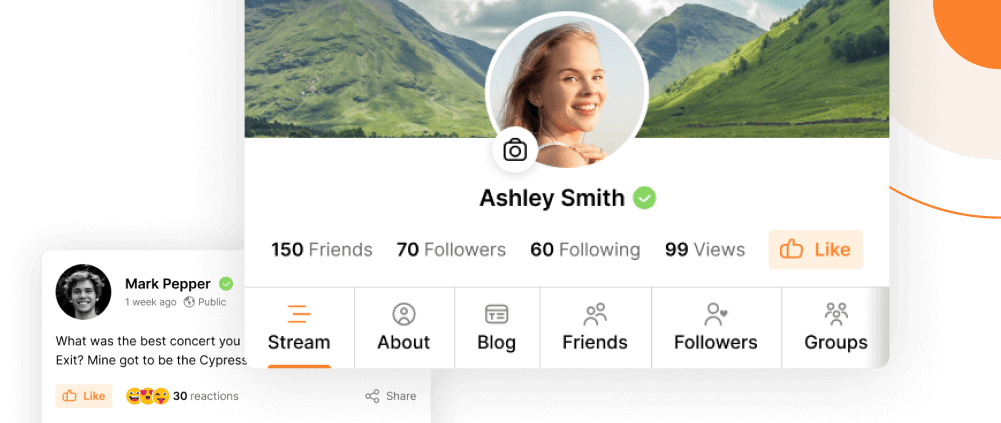
PeepSo member profiles help create that sense of identity.
Members are not just names in a comment thread. They become part of the community.
That deeper sense of presence can improve engagement and make paid access feel more worthwhile.
Keep Members Engaged With Notifications and Messaging
Monetization depends on engagement.
A paid community that feels inactive will struggle to retain members. People need reminders, responses, and reasons to return.
PeepSo includes notifications and messaging features that help keep members connected. Notifications bring people back into conversations. Messaging supports direct connection between members.
These features can make a community feel alive.
They also support business goals. Active members are more likely to renew, attend events, buy products, join premium groups, and recommend the community to others.
Engagement should not rely only on announcements from the site owner. The strongest communities create member-to-member interaction.
That is where activity streams, profiles, groups, notifications, and messaging work together.
Why WordPress and PeepSo Work Well for Community Monetization
WordPress gives site owners control over content, design, SEO, sales pages, checkout, analytics, plugins, and long-term business strategy.
PeepSo adds the community layer.
Together, they create a practical foundation for monetization.
Instead of building an audience on one platform, selling on another, hosting courses somewhere else, and managing conversations in a separate group, site owners can bring the experience together on their own website.
That is a major advantage over Facebook Groups and Discord, where the community does not fully belong to the site owner.
It also gives more flexibility than many hosted community platforms. Tools like Mighty Networks and Circle can be useful, but they keep the community inside their ecosystem. With PeepSo, the community is part of WordPress, which means the site owner can connect it with the wider plugin ecosystem.
That includes WooCommerce for selling products, LearnDash for courses, Advanced Ads for advertising, WP Event Manager for events, and other WordPress tools that support different business models.
For many entrepreneurs, creators, and membership site owners, that combination is exactly what is needed.
The website becomes the hub.
The community becomes the relationship layer.
The monetization strategy becomes easier to build, test, and improve.
Conclusion
Monetizing an online community is not about adding random paid offers.
It is about understanding what members value and building a business model around that value.
Paid memberships, premium groups, courses, digital products, events, sponsorships, advertising, coaching, and customer support can all work when they are connected to a strong community experience.
The most important decision is where the community lives.
A third-party platform may be easy to start with, but long-term monetization needs ownership, flexibility, and integration. WordPress gives site owners that foundation, and PeepSo adds the social features needed to turn a website into a real community platform.
With PeepSo, creators, course builders, membership site owners, and entrepreneurs can build a community they own, shape the member experience, and create revenue streams that grow naturally from engagement.
A strong community becomes more than an audience.
It becomes a business asset.

Reactions & comments
Comments