

Building an online community from zero can feel overwhelming. Most site owners and creators do not struggle because they lack passion. They struggle because they launch too broadly, invite the wrong people, or rely on platforms they do not control. If you want to grow from 0 to 1,000 members, the goal is not to attract everyone. The goal is to create a clear reason for the right people to join, participate, and stay.
A successful community does more than collect signups. It creates regular interaction, useful conversations, and a sense of momentum. That is what turns a small group into an active member base. It is also why the platform you choose matters. If your community lives entirely on rented space like Facebook Groups or Discord, you are limited by someone else’s algorithm, branding, and rules. A WordPress-based solution like PeepSo gives you full ownership, better control over the member experience, and the core social networking features people expect such as profiles, groups, messaging, notifications, and activity streams.
This article explains how to grow an online community from 0 to 1,000 members with a practical, realistic strategy. It covers positioning, content, engagement, onboarding, and retention so you can build a community that grows steadily instead of stalling after launch.
Growing an Online Community the Right Way
Reaching 1,000 members is not just a vanity milestone. It is often the point where a community starts to become self-sustaining. New members see existing conversations. Members answer each other’s questions. Small groups form around shared interests. The community starts to create value even when you are not actively posting every hour.
The problem is that many communities fail long before that point. They start with a general idea, weak onboarding, and no structure for engagement. People join once, look around, and leave. Growth becomes expensive because every new member has to be pushed in through marketing instead of pulled in by real value.
That is why community building should be treated as a product, not just a promotional channel. You need a clear audience, a repeatable engagement system, and a platform that supports meaningful interaction. PeepSo is especially effective here because it lets you build those interactions directly into your own WordPress site. Instead of splitting your audience across multiple tools, you can keep your content, memberships, and community experience in one place.
Start with a Sharp Community Promise
Before you try to grow an online community, define what members will get from joining. This is your community promise. It should answer one simple question: why should someone become a member and return regularly?
A vague answer such as “network with like-minded people” is rarely enough. A stronger promise sounds more specific. For example, “a private community for course creators who want to grow recurring revenue” or “a WordPress membership community where fitness coaches share retention and content strategies.” Specific communities grow faster because the right people recognize immediately that the space is for them.
Focus on a Clear Audience
Your first 100 members are easier to attract when the audience is narrow. Broad communities sound appealing, but they are hard to energize because members do not know what they are supposed to talk about. A focused audience creates natural conversation and faster trust.
A good starting audience could be:
- Website owners building paid membership sites
- Course creators using WordPress
- Entrepreneurs launching niche communities
- Coaches building a branded member network
- Local organizations moving their community online
When you choose a clear audience, it becomes easier to write your homepage, your signup page, and your content. It also makes member referrals more likely because people can quickly explain who the community is for.
Define the First Transformation
Members do not join just for access. They join for progress. Your community should help them achieve a clear outcome. That outcome could be learning faster, getting support, meeting peers, finding accountability, or accessing resources.
For example, if you are building a creator community, the first transformation might be helping new members move from inconsistent publishing to a stable content routine. If you run a membership site owner community, the transformation might be helping members improve retention and build more engagement.
When your promise is tied to an outcome, your growth strategy becomes much stronger.
Choose a Platform You Control from Day One
The platform decision has a direct effect on growth. If your members do not enjoy the experience, growth slows down. If you do not control your data and branding, long-term community building becomes harder.
Many people start with Facebook Groups because it feels easy. Others use Discord because it seems active. The problem is that both create tradeoffs. Facebook competes for attention with everything else in the feed. Discord can feel fragmented and overwhelming, especially for audiences that prefer structured conversations and easy navigation.
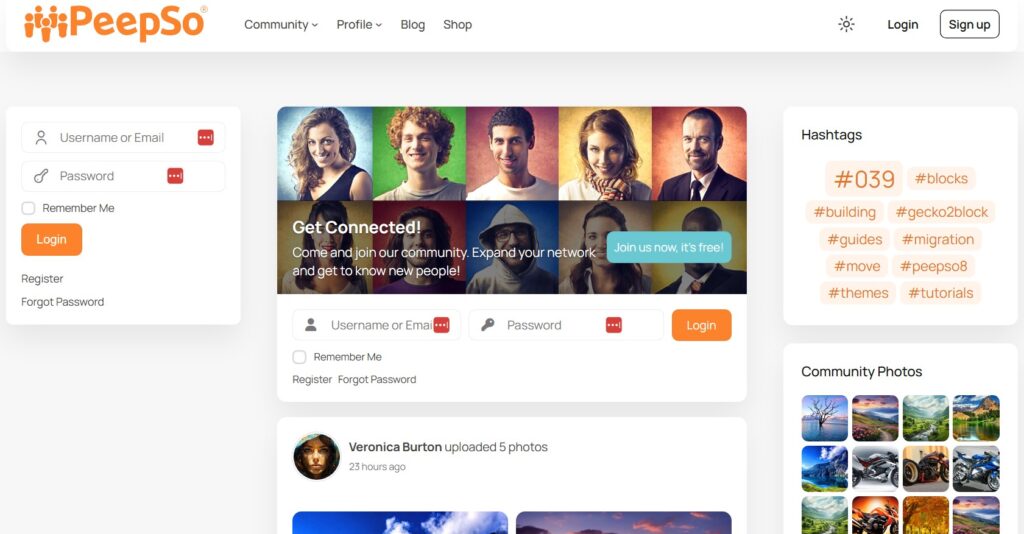
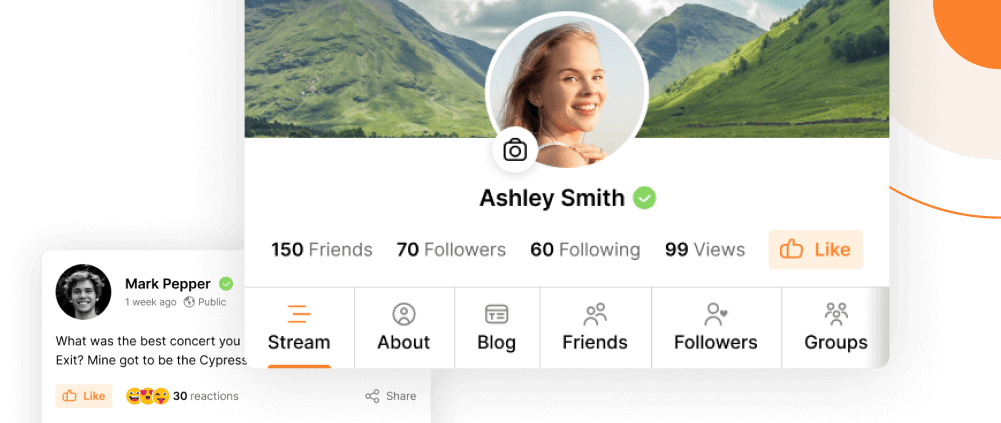
A self-hosted WordPress community offers more control. PeepSo is one of the best practical choices because it combines the ownership benefits of WordPress with the social features members expect from modern communities. You can create rich member profiles, private messages, groups, activity feeds, notifications, and a branded member environment without handing the experience over to a third-party network.
Why PeepSo Works Well for Early Growth
When you are growing from 0 to 1,000 members, simplicity matters. Members should immediately understand where to post, how to connect, and how to return. PeepSo makes that easier because the core social experience is built for community websites rather than adapted from a discussion forum or chat tool.
This is especially useful if you already use WordPress for content, courses, memberships, or ecommerce. Instead of sending users to an external platform, you keep the community inside your own ecosystem. That improves trust, supports branding, and gives you more flexibility as your member base grows.

PeepSo Power Suite

Build the First 100 Members Before You Worry About 1,000
The biggest mistake in community growth is trying to scale before the first members are engaged. Your first goal is not mass traffic. It is getting a small group of the right people to care.
Recruit Founding Members Personally
In the earliest stage, personal outreach works better than broad promotion. Invite people who already know your work, customers who fit the audience, newsletter subscribers, social followers, and professional contacts. Explain why you are building the community and why they are a good fit.
Founding members should not be random. They should be people likely to post, reply, and give feedback. A smaller active group is far more valuable than hundreds of silent signups.
A good early target is 25 to 50 founding members. Once they begin interacting, you have the social proof needed to attract the next wave.
Give People a Reason to Join Now
Urgency helps when it is authentic. You can offer founding-member benefits such as direct access, early feedback opportunities, special group access, or influence over the direction of the community.
This does not need to be complicated. The point is to make early members feel that joining now matters. That feeling helps convert people who might otherwise delay.
Seed the Community Before Public Launch
Never launch an empty community. Prepare posts, member introductions, welcome threads, and useful resources before you open registration more widely. An empty community feels abandoned. A prepared one feels active and intentional.
Useful seeded content includes:
- A welcome post explaining what members should do first
- Three to five discussion questions tied to your niche
- A resource section with templates, guides, or recordings
- A pinned post explaining community norms
Create a Weekly Engagement System
Communities rarely grow through random activity. They grow when members know what to expect and when to participate. A simple weekly rhythm keeps the space alive.
Use Recurring Content Formats
You do not need endless new ideas. You need repeatable formats that encourage participation. Examples include Monday goals, Wednesday feedback requests, Friday wins, monthly Q&A threads, and themed group discussions.
Recurring formats lower the effort required to participate. Members understand the pattern and can join in more easily. This consistency also helps your moderation and content planning.
Make Posting Easy for Members
Many members want to participate but do not know what to say. Good community managers reduce that friction. Ask specific questions instead of broad ones. Give examples. Invite screenshots, short answers, or quick polls.
Instead of asking “How is everyone doing?” ask “What is one member retention tactic you tested this week?” Specific questions produce better conversation.
Reward Participation Early
People repeat behavior that gets noticed. Reply quickly to early posts. Welcome new members by name. Highlight helpful contributions. Mention member wins in community updates.
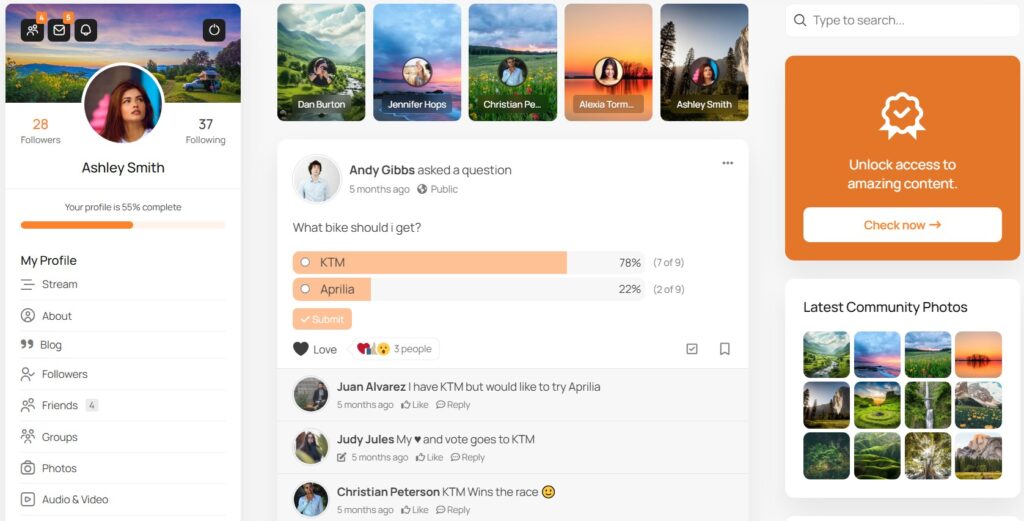
PeepSo supports this kind of recognition well because activity streams, notifications, and profiles make interaction more visible. When members feel seen, they are more likely to return.
Use Content to Pull in the Right Members
An online community grows best when public content feeds private participation. You need a content engine that attracts the right people and gives them a clear next step into the community.
Publish Content That Solves Entry-Level Problems
Your public blog, newsletter, podcast, or videos should address the problems your target members are already searching for. This is how SEO and community growth work together.
For example, if your community is for membership site owners, your content might cover onboarding flows, retention tactics, pricing strategy, or WordPress automation. At the end of each piece, invite readers to continue the discussion inside your community.
This works especially well when the community is hosted on your own site. With PeepSo, your articles, membership offers, and social space can all support each other.
Turn Community Discussions into Content Ideas
Your members will tell you what content to publish if you pay attention. Their questions, objections, and repeated challenges are valuable SEO topics. Write public content around those themes, then invite readers back into the community for deeper discussion.
This creates a loop. Content brings in new members. Community interaction creates more content ideas. Over time, your acquisition gets stronger because it is built on real audience needs.
Add Strong Calls to Join
Do not assume people will search for your community link. Place clear invitations in your articles, emails, videos, and lead magnets. Explain who the community is for and what happens after joining.
A call to action works best when it is tied to a benefit. Instead of saying “Join our community,” say “Join our WordPress creator community to get feedback, connect with peers, and access private discussions.”
Improve Onboarding So New Members Actually Stay
Growth is not just acquisition. It is retention. A community that loses most new members after the first visit will always struggle.
Guide the First Five Minutes
The first few minutes after signup shape the member’s impression. Tell people what to do first. That might include completing their profile, introducing themselves, joining a group, or replying to a welcome thread.
PeepSo is useful here because member profiles, groups, and activity feeds create a structured path for participation. You can direct members into those actions instead of leaving them to figure everything out alone.
Make Profiles Matter
Profiles should not be treated as optional decoration. They help members understand who is in the community and why they should connect. Ask for useful profile details tied to your niche, such as role, goals, industry, or experience level.
Better profiles make networking easier and improve conversation quality. They also make the community feel more human from the beginning.
Segment Members into Groups
As you grow, one main feed is not always enough. Smaller groups help members find more relevant discussions. You might create groups by experience level, topic, business model, or location.
PeepSo groups help organize conversations without pushing people into an overwhelming interface. That structure becomes increasingly valuable as you move from 100 members to 1,000.
Encourage Referrals Without Making Them Feel Forced
The fastest path to 1,000 members is often member-driven growth. But referrals happen when the community already feels useful and active.
Give Members Something Worth Sharing
People invite others when they feel proud of the space. That usually comes from a strong niche, active discussions, and a clear identity. If your community feels generic, referrals stay low.
Create moments worth sharing. Host member spotlights, publish useful discussions, or run themed events that members naturally mention to peers.
Ask at the Right Time
The best time to ask for a referral is after a member has received value. That could be after a helpful conversation, a solved problem, or a successful event. The invitation can be simple: if they know someone who would benefit, they can invite them.
Highlight Community Wins
Share progress openly. When members see growth, participation, and success stories, they feel part of something moving forward. Momentum attracts more momentum.
Measure What Actually Drives Growth
You do not need dozens of metrics at the start. You need a few numbers that show whether the community is becoming healthier over time.
Track how many new members join each week, how many post or comment, how many return after seven days, and which acquisition channels bring the best members. Also track whether certain groups, topics, or formats create more engagement.
The goal is not just bigger numbers. It is stronger participation. A community with 100 active members is healthier than one with 10,000 inactive signups.
As you measure growth, look for patterns. Which onboarding actions increase retention? Which content topics attract better fits? Which engagement source generate replies? Use those answers to refine the experience.
A Practical 90-Day Path from 0 to 1,000 Members
A realistic growth plan is easier to follow when broken into stages.
Days 1 to 30: Set the Foundation
In the first month, define your audience, set up your platform, seed key discussions, and recruit founding members personally. Focus on clarity, not scale. This is where using an owned platform like PeepSo helps because you can shape the experience properly from the start.
Days 31 to 60: Build Consistent Engagement
In the second month, establish recurring discussion formats, improve onboarding, and encourage introductions, replies, and group participation. Start publishing or repurposing content that points people into the community.
Days 61 to 90: Expand with Content and Referrals
In the third month, promote the community more widely through SEO content, email, partnerships, webinars, or creator collaborations. Ask engaged members to invite peers. Review your activity data and double down on the channels and formats that create active members, not just signups.
This process does not guarantee exactly 1,000 members in 90 days, because growth depends on your niche, audience size, and effort. But it does create the conditions that make steady growth possible.
Conclusion
Growing an online community from 0 to 1,000 members is not about chasing viral spikes. It is about building a clear promise, attracting the right people, creating repeatable engagement, and keeping the experience under your control. The strongest communities are specific, structured, and useful.
That is why platform choice matters so much. If you want to build a serious community around your brand, content, courses, or membership business, owning the experience is a major advantage. PeepSo gives WordPress site owners a practical way to create a real social community with member profiles, activity streams, messaging, groups, and notifications on their own site. That combination of ownership and social functionality makes it one of the best options for anyone serious about long-term community growth.
If your goal is not just to collect signups but to build an engaged member base that keeps returning, start small, stay focused, and design for participation from the very beginning.


Reactions & comments
Comments