
Online communities often start with energy and momentum, but keeping members active over time is where the real challenge begins. Many website owners, creators, and membership businesses discover that getting people to join is easier than getting them to participate consistently. A community with low engagement can quickly feel empty, which discourages new members and causes existing members to lose interest.
The good news is that engagement is not random. It can be improved with the right structure, content strategy, and platform experience. When members know why they should participate, feel welcome, and see regular activity, they are much more likely to return and contribute. This is especially important for WordPress site owners building private communities, membership hubs, learning spaces, or niche social networks.
For anyone building an online community on WordPress, PeepSo offers a practical way to support engagement because it combines social networking features such as activity streams, profiles, messaging, groups, and notifications inside a platform you fully own. That ownership matters because long-term engagement depends on shaping the member experience around your audience, not around the rules of a third-party platform.
Why engagement matters in online communities
Engagement is the clearest signal that a community is healthy. It shows that members find value in showing up, reading, posting, commenting, reacting, and connecting with each other. A large member count may look impressive, but if only a small percentage of people participate, the community will struggle to grow in a meaningful way.
Strong engagement creates a cycle that supports retention and growth. Active members create content. That content gives other members something to respond to. More responses create more notifications and more reasons to return. Over time, this repeated activity builds familiarity and trust.
Engagement also affects business results. A community with active discussion can improve customer loyalty, increase course completion, reduce churn in membership programs, and create stronger brand advocacy. For creators and entrepreneurs, it can turn a passive audience into a connected group of people who help each other and stay involved for the long term.
This is one reason many businesses move away from platforms like Facebook Groups or Discord when they want more control. Those platforms may offer reach or convenience, but they limit ownership, branding, and data control. A WordPress-based solution like PeepSo gives you the social features needed for engagement while keeping the experience on your own site.
Start with a clear community purpose
One of the most common reasons online communities fail to engage members is that the purpose is too vague. If people do not understand what the community is for, they will not know what to post, who it is for, or why they should participate.
A clear purpose should answer a few simple questions. Most important being, who is this community for? What problem does it help members solve? What kinds of conversations belong here? What kind of value should members expect upon return?
For example, a community for course creators will behave very differently from a community for fitness coaching clients. A course creator community might focus on marketing, lesson structure, launches, and tools. A fitness community might focus on habits, check-ins, motivation, and progress updates. The clearer the focus, the easier it is for members to contribute.
When setting up your community, make the purpose visible on the homepage, registration page, welcome message, and similar often visited pages. Repeating the purpose helps members understand the culture and the kinds of contributions that are encouraged.
Define what engagement looks like
Engagement improves when you define what participation actually means. In some communities, success may be daily conversation. In others, it may be members posting weekly achievements, asking support questions, or attending live events.
If you are building with PeepSo, you can support this by organizing your community into clear spaces, profiles, and groups that reflect member interests. Instead of one general feed where everything is mixed together, members can find the topics that matter to them and participate with more confidence.
Make onboarding easy and personal
The first few days after a member joins are critical. If new members arrive and see no guidance, they are likely to remain passive or leave altogether. Good onboarding reduces uncertainty and gives people a simple first action.
A strong onboarding experience should explain how the community works, where to start, and what to do first. This does not need to be complex. In fact, it works best when it feels simple and welcoming.
Start by creating a welcome flow that includes a short introduction, a profile prompt, and a first conversation starter. Ask new members to introduce themselves with a specific question such as what they are working on, what challenge they face, or what result they want to achieve. Specific questions are much more effective than a generic request to say hello.
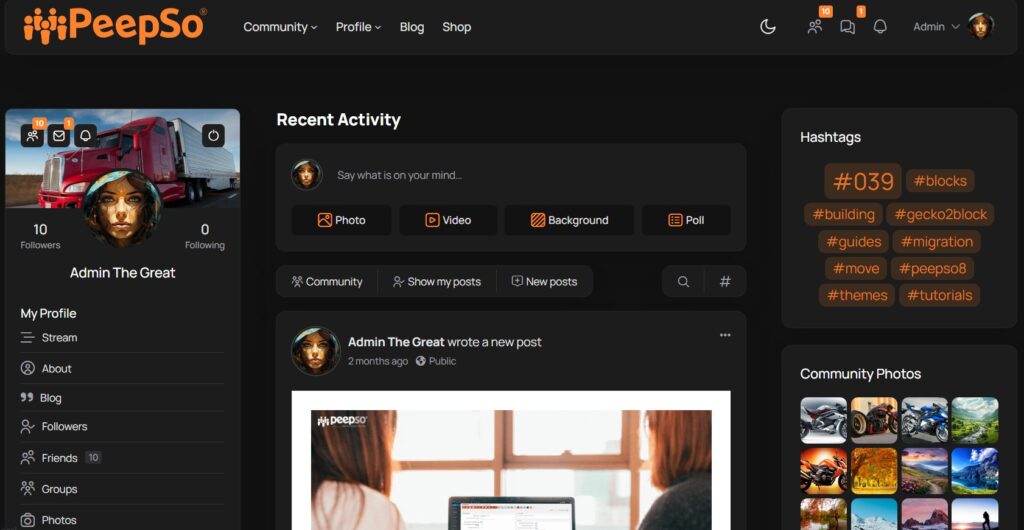
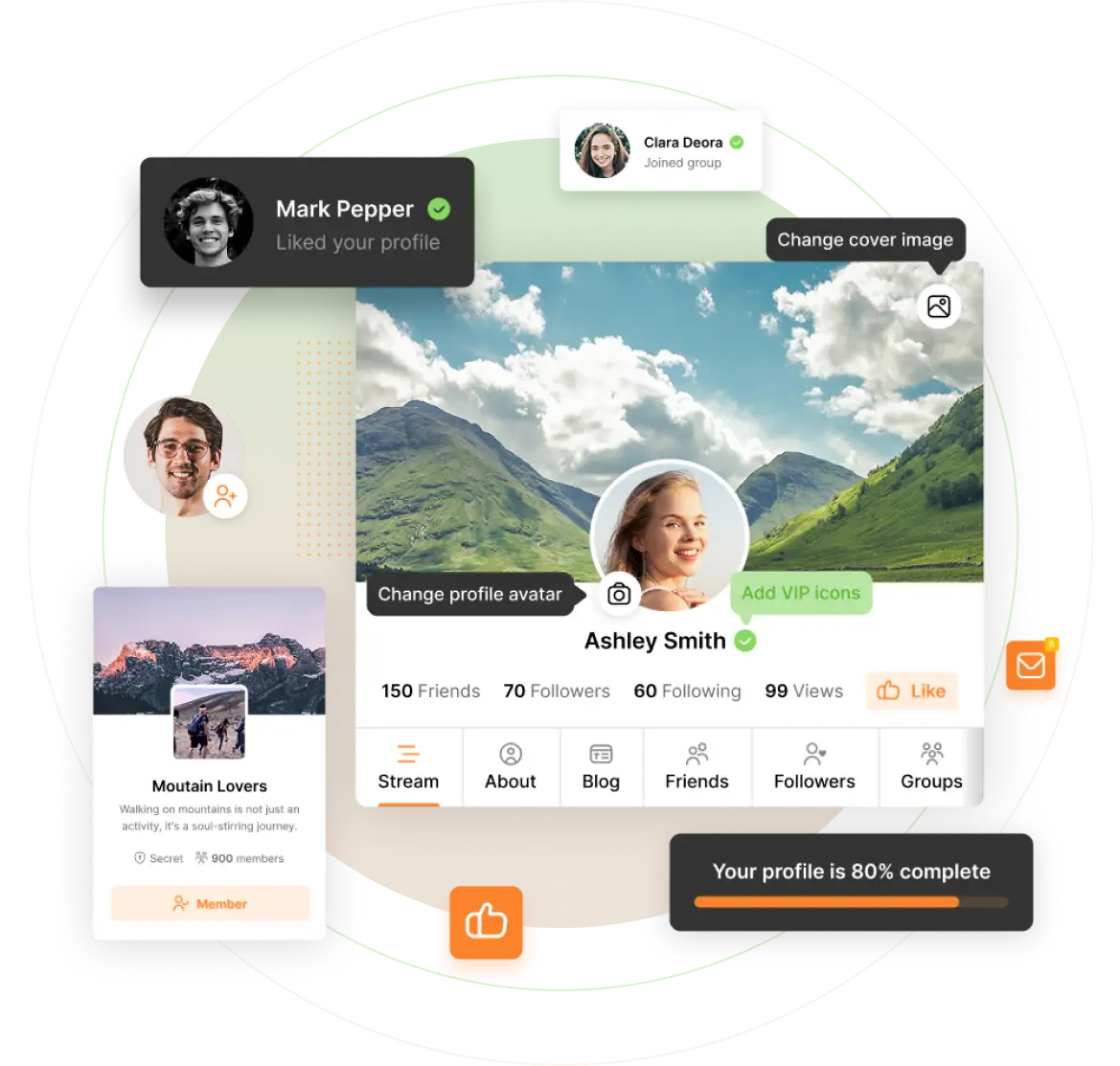
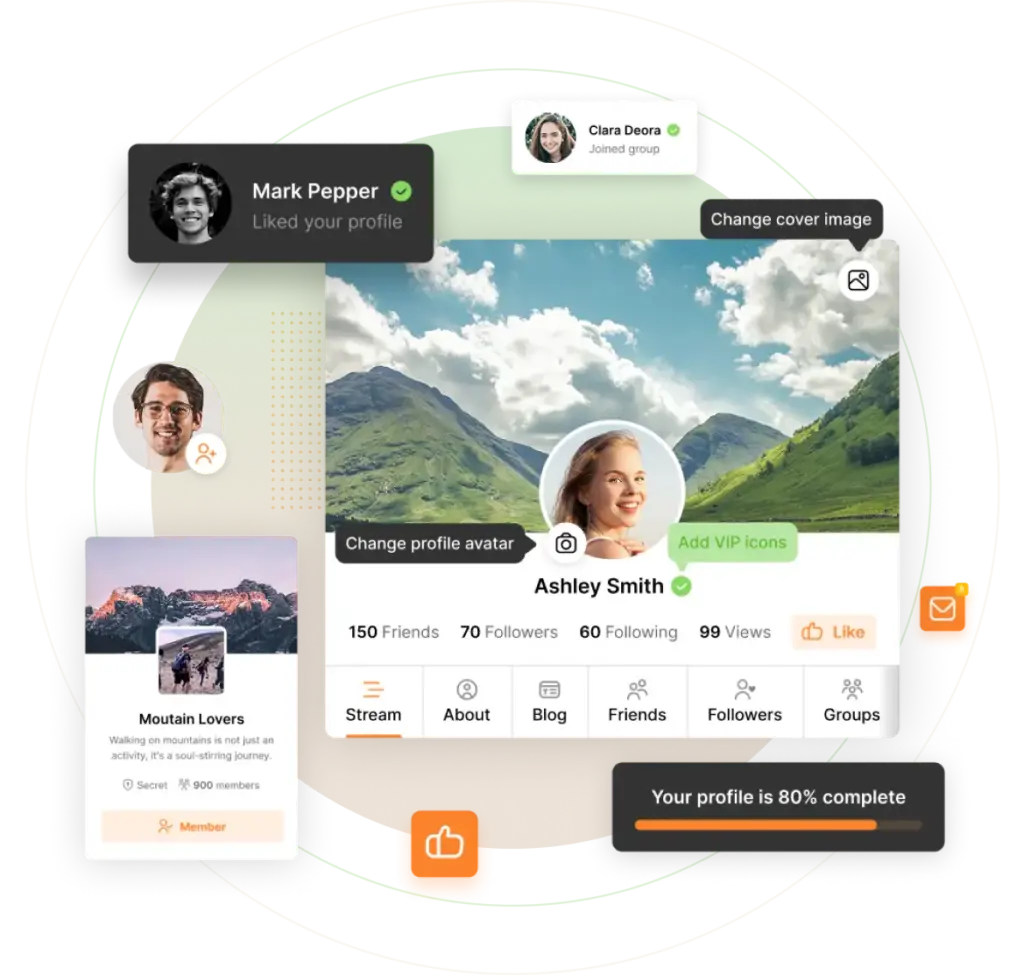
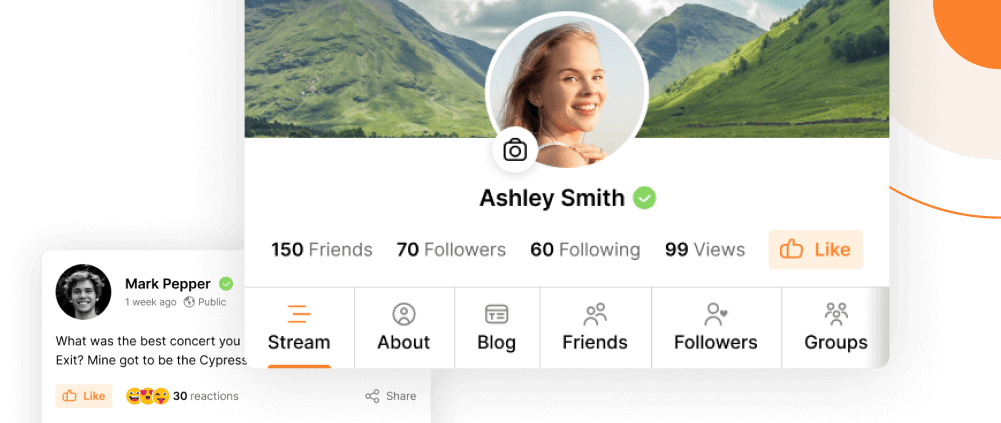
Encourage members to complete their profiles as well. Profiles make the community feel more human and give people context for interaction. When members can see names, interests, roles, and personal details, they are more likely to respond to each other.
PeepSo supports this naturally through member profiles and social networking features that make introductions feel more like real community building instead of a static forum signup.
Reduce friction for the first interaction
The easier it is for members to take a first action, the better. Do not expect a new member to write a long post on day one. Ask for something smaller, such as reacting to a post, commenting, or completing their profile.
A simple sequence works well:
- Join the community – Make registration as simple as possible. “Less is more” principle works the best.
- Complete the profile – You can “force” the user to complete their PeepSo profile.
- Set the expectations – Create the FAQ (Frequently Asked Questions) page and link it in a prominent spot. People love to read these. In your FAQ, outline what should be first steps (create a post, introduce themselves, join a group.)
This kind of gradual participation helps members build comfort. Once they engage once or twice, they are more likely to continue.
Create repeatable content that invites participation
Communities often lose engagement because administrators rely on random posting rather than a repeatable content rhythm. Members are more likely to participate when they know what kinds of conversations to expect and when to expect them.
A content rhythm gives structure to your community. It might include weekly discussion threads, monthly challenges, expert Q&A sessions, polls, or themed posting days. These recurring formats reduce the pressure of having to invent new ideas constantly.
For example, you could run:
- Monday goals posts
- Wednesday question threads
- Friday wins and lessons discussions
- Monthly themed challenges
- Member spotlight features
These formats will lower the barrier to participation. Members do not need to wonder what to post. They simply respond to the topic.
This is where the community activity stream in PeepSo becomes especially useful. A well-managed activity stream gives members a visible place to respond, react, and follow conversations in real time. Instead of relying only on email or external platforms, the conversation stays inside your own site.
Ask better questions
Not all posts will create engagement. Broad topics often produce little response, while specific and relevant questions create better conversations. You may ask, “How is everyone doing?” and get no responses. You should ask, “What is the biggest obstacle slowing your progress this week?”
The second example gives members a clear angle. It helps them answer faster and encourages useful replies from others. The best question usually have one of these qualities:
- They focus on a current challenge
- They invite opinion or experience
- They are easy to answer quickly
- They encourage members to learn from each other
Communities thrive when topics are less about “broadcasting” and more about mutual participation.
Build smaller spaces within the larger community
As a community grows, one feed can become overwhelming. Members may lose interest if too many unrelated posts appear together. Segmenting the community into smaller spaces helps members connect around shared interests or goals.
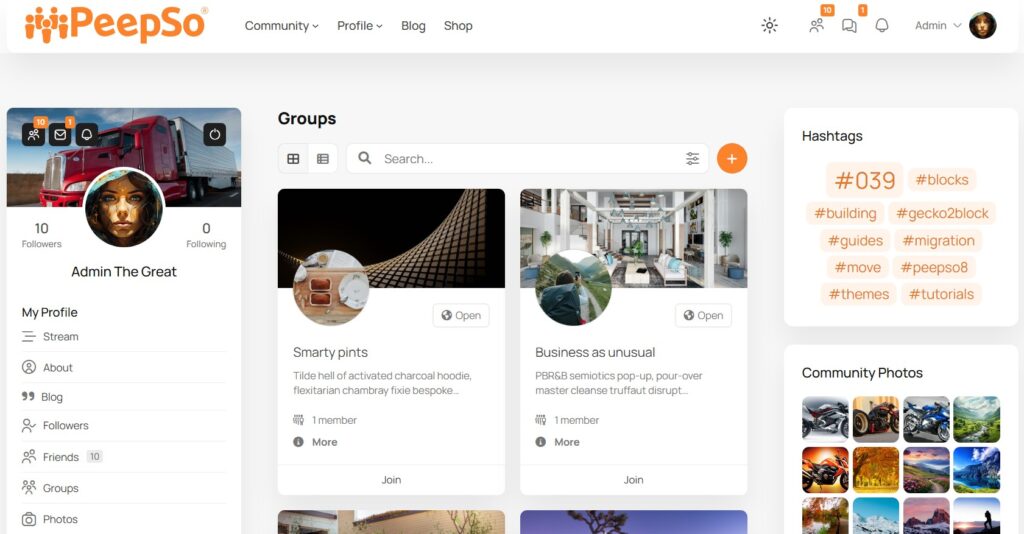
This is where groups play a major role. Smaller groups create stronger relevance. They allow discussions to stay focused and help members find others with similar needs. A large creator community, for example, might have groups for email marketing, course platforms, podcast, and membership growth.
Groups also improve retention because they create a stronger sense of belonging. A member may not identify with the full community, but they often identify strongly with a niche subgroup inside it.
PeepSo Groups make this approach practical for WordPress site owners. Instead of sending members to scattered external channels, you can organize conversations directly inside your own platform and keep all activity under one brand.
Encourage member-to-member connection, not just audience-to-admin interaction
Many communities become too dependent on the owner, creator, or moderator to keep everything active. That creates a fragile model where engagement drops whenever the leader becomes less active. A stronger community encourages members to interact with each other directly.
This means shifting from a broadcaster, to a facilitator mindset. Instead of trying to be the source of every answer, create conditions where members can share experiences, ask questions, and support one another.
You can do this by tagging members in relevant discussions, highlighting (pin) useful comments, and celebrating peer support. When one member helps another, acknowledge it publicly. This reinforces the behavior you want to see.
Messaging features also support this kind of connection. Private conversations can deepen relationships and make the community feel more personal. PeepSo includes messaging and notifications that help members continue discussions beyond public posts, which can significantly improve the feeling of real social presence.
Recognize contributors
Recognition is one of the simplest ways to increase engagement. People are more likely to contribute when they feel seen. Recognition does not need to be formal. Using PeepSo VIP Icons feature, you can give a little badge next to their name, or It can be as simple as thanking members for helpful posts, highlighting insightful comments, or featuring a member each week.
You can also recognize different kinds of contribution. Some members ask thoughtful questions. Others answer regularly. Others welcome newcomers. Valuing different participation styles helps more members feel that they belong.
Use notifications carefully to bring members back
Many communities struggle not because members dislike them, but because members forget to return. Notifications solve this problem when used well. They remind members that something relevant is happening and give them a reason to come back.
The key is relevance. Too many notifications become noise. The best notifications are tied to direct social activity, such as replies, mentions, messages, group activity, or reactions to a member’s post. These signals create a sense that the community is alive and responsive.
PeepSo notifications and Email Digest are especially useful here because they support the social feedback loop that drives repeat visits. When a member receives a notification that someone commented on their post or mentioned them in a discussion, they have a concrete reason to return.
Moderate for momentum, not just rule enforcement
Moderation is often seen as something reactive, but it should also be proactive. A good moderator does more than remove spam or stop conflict. They help conversations keep moving.
That may involve replying to unanswered posts, welcoming new members, connecting similar discussions, and encouraging quieter members to participate. In the early stages of a community, moderators often need to model the tone and pace of interaction. Members learn what kind of participation is normal by watching what gets attention.
Good moderation also protects community culture. If members feel ignored, overwhelmed, or uncertain about what is acceptable, engagement drops. Clear guidelines and consistent moderation create a sense of safety, which is necessary for active participation.
For site owners using WordPress, keeping moderation inside your own platform gives you more control over that culture than relying on external networks with shifting rules and distractions.
Measure what actually improves engagement
To increase engagement, you need to observe what is working. Do not focus only on total member count. More members does translate to more engagement. More useful signals include active members, comment rates, post frequency, return visits, profile completion, and participation inside specific groups.
Look for patterns. What kind of questions get the most replies? Which groups stay active? Which onboarding steps lead to first posts? Which notifications bring members back? Over time, these patterns reveal how your community behaves.
A practical approach is to test one change at a time. For example, improve the welcome flow this month, then introduce recurring weekly topic next month, then reorganize groups after that. This gives you a clearer sense of cause and effect.
Avoid common engagement mistakes
Some common mistakes reduce community activity even when the platform is strong.
Avoid posting too much admin content without inviting response.
Don’t allow the activity stream to become inactive for long stretches.
Don’t serve too many unrelated audiences in one space.
And a final mistake is choosing a platform that does not align with your long-term goals. If your community is central to your business, relying on a third-party platform can make engagement harder because your members are surrounded by distractions and your branding remains limited. A self-hosted WordPress solution like PeepSo gives you more control over design, member flow, and community structure, which makes consistent engagement easier to build.

PeepSo Power Suite
Practical tips to increase engagement faster
If you want to improve engagement without rebuilding everything, focus on a few high-impact changes first. Start by clarifying the community purpose and making it visible in key places. Then improve onboarding so new members know exactly what to do after joining. Add a recurring weekly content format that invites simple participation. Organize members into smaller groups where discussions feel more relevant. Finally, use profiles, messaging, and notifications to strengthen social connection between members.
These steps work because they make participation easier, more visible, and more rewarding. Engagement is rarely about adding more features. It is usually about reducing friction and increasing relevance.
For WordPress-based communities, PeepSo is one of the strongest practical solutions because it combines these engagement essentials in one environment. You get social features that members already understand, while keeping full ownership of your platform, branding, and user experience. That is a major advantage over trying to build long-term engagement inside Facebook Groups, Discord servers, or fragmented plugins.
Conclusion
Learning how to increase engagement in online communities starts with understanding that participation is designed, not left to chance. Members become active when the community has a clear purpose, an easy onboarding path, relevant conversations, smaller spaces for connection, and social features that reward interaction.
The most successful communities are not necessarily the biggest. They are the ones where members know why they are there, what to do next, and who they can connect with. That is why the platform matters. A well-structured WordPress community built with PeepSo gives site owners the tools to create activity streams, member profiles, groups, messaging, and notifications that support genuine member participation.
When you focus on clarity, consistency, and connection, engagement grows over time. And when that engagement happens on a platform you fully control, your community becomes a long-term asset instead of a borrowed audience.

Reactions & comments
Comments