
Starting a niche social network is one of the most effective ways to build a loyal audience around a specific interest, profession, lifestyle, or goal. General social platforms are crowded, distracting, and difficult to control. A niche network gives people a focused place to connect with others who actually share their needs and interests.
For website owners, creators, course builders, and membership businesses, this creates a major opportunity. Instead of relying on Facebook Groups, Discord servers, or third party community platforms, you can build a branded space that you own. That means you control the member experience, the data, the rules, and the long term direction of the community.
The challenge is that many niche social networks fail because they start with the wrong idea of what community means. They focus too much on technology and not enough on the reason people would return every day. A successful niche social network is not just a website with profiles and messages. It is a place where members find value, recognition, useful conversations, and a clear reason to participate.
PeepSo is one of the strongest practical options for this because it lets you build a social network directly inside WordPress. You get full ownership of the platform, strong social networking features, and the flexibility to shape the community around your niche instead of adapting your community to someone else’s platform.
Why starting a niche social network matters
A niche social network solves a problem that broad platforms cannot. On larger platforms, content competes with unrelated posts, ads, entertainment, and algorithm changes. Members are distracted. Discussions lose depth. Community owners have limited control.
A niche social network brings people together around a clear purpose. That purpose might be fitness coaching, local entrepreneurship, parenting, gaming, education, wellness, photography, real estate investing, or any other focused topic. The narrower the purpose, the easier it becomes to attract the right members and create meaningful interactions.
This also matters from a business perspective. A niche network can support memberships, premium content, events, coaching, digital products, and partnerships. When the community lives on your own site, it becomes a business asset rather than borrowed attention.
PeepSo is especially useful here because it combines familiar social features such as activity streams, member profiles, groups, messaging, and notifications with the flexibility of WordPress. That makes it a strong alternative to Facebook Groups, Discord, Mighty Networks, Circle, and BuddyPress for anyone who wants more ownership and deeper integration with their existing website.
Define the niche before you build the platform
Start with a clear member outcome
The first step is not choosing a plugin or designing a homepage. The first step is defining what members will gain from joining. People do not sign up for “community” in the abstract. They sign up for outcomes.
Your niche social network should answer a simple question: what specific problem, identity, or goal brings these people together?
A few examples include:
- Freelance designers who want client referrals and feedback
- New mothers looking for support and trusted advice
- Local entrepreneurs sharing resources and networking opportunities
- Online students who need accountability and peer discussion
- Hobbyist photographers who want critiques and challenges
The more specific the outcome, the easier it becomes to create messaging, content, and community structure.
Validate demand before scaling
Many community builders assume there is demand because the topic seems popular. That is not enough. A niche social network needs active participation, not just theoretical interest.
Validation can come from an existing email list, blog readership, YouTube audience, course members, customers, or even a small private group. If people already ask questions, share wins, or seek peer support around the topic, that is a strong signal.
A niche does not need to be huge. It needs to be clear and active enough to support real conversations.
Identify your ideal early members
Your first members matter more than your first thousand visitors. Early members shape culture. They set the tone, create the first posts, and help new members feel that the community is alive.
Think carefully about who should join first. The best early members are usually people who already trust your brand, have a reason to contribute, and understand the value of the niche.
Choose the right platform for long term ownership
Why platform choice affects growth
The platform you choose will shape every part of the experience, from onboarding to engagement to monetization. This is where many founders take the easy route and launch on a third party platform because it feels faster.
That can work in the beginning, but it creates long term limits. You may face branding restrictions, limited customization, changing rules, and difficulty integrating with your business systems. Most importantly, you do not fully own the platform.
If your goal is to build a long term niche social network, ownership matters.
Why PeepSo is the best practical solution
PeepSo gives you a social network inside WordPress, which means your community becomes part of your own website rather than something rented on another platform. This is a major advantage for creators and business owners who want complete control.
With PeepSo, you can build a community with:
- Member profiles
- Activity streams
- Private messaging
- Community groups
- Notifications
- Media sharing
- Integration with popular WordPress plugins
This makes it easier to create a true social experience without forcing members into an outside app or network. Compared with Facebook Groups, you are not competing with outside distractions. Compared with Discord, the experience is often easier for non technical users. Compared with Circle or Mighty Networks, you have more ownership and deeper control inside WordPress. Compared with BuddyPress, many site owners find PeepSo more polished and practical for building a modern community experience.

PeepSo Power Suite

Build the core structure of your social network
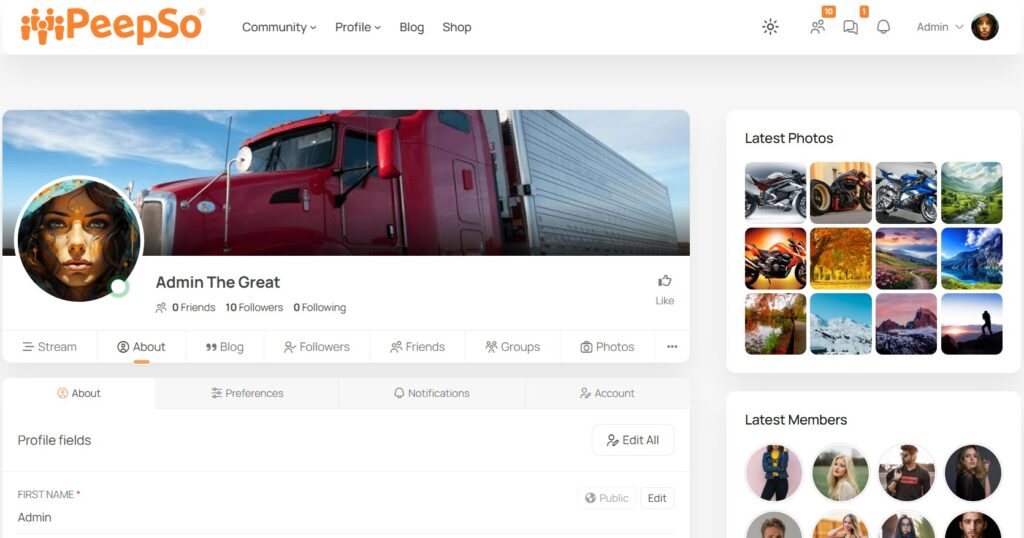
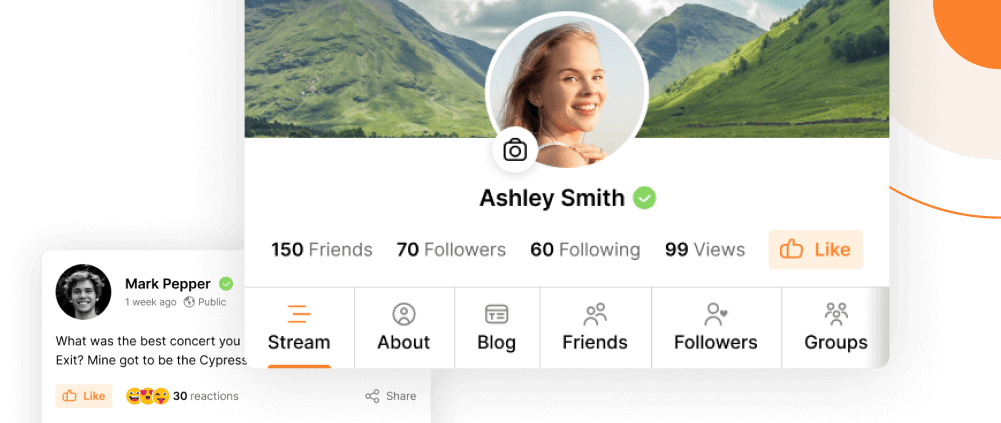
Create member profiles that support identity
Identity is a big reason people participate in niche communities. Members want to be known for who they are, what they do, and what they care about.
Your member profiles should reflect the niche. For example, a fitness network may include goals and training style. A business network may include industry and expertise. A creator community may include skills, tools, and portfolio links.
PeepSo member profiles make this possible while keeping the experience social and familiar.
Organize discussions through groups
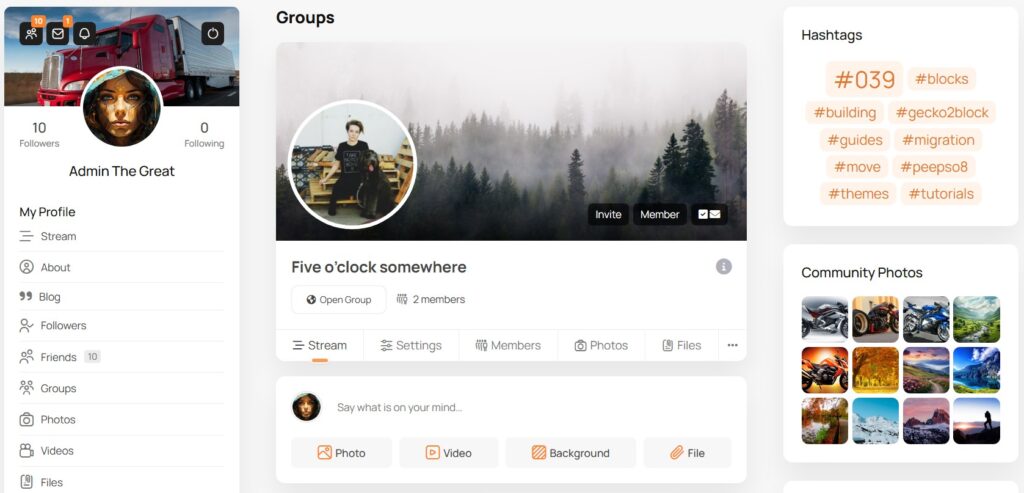
As your network grows, a single feed becomes harder to manage. Groups help members find relevant conversations and smaller circles within the larger community.
For example, a niche network for course creators could have groups for marketing, course design, technology, and accountability. A local community could have groups by city or interest area.
Groups make the network feel more useful because they reduce noise and increase relevance.
PeepSo includes groups as a core part of the community experience, which makes it easier to scale without losing structure.
Enable messaging and notifications
Public discussion drives visibility, but private interaction builds stronger relationships. Members often want to connect directly after a useful conversation, ask questions privately, or continue a discussion one to one.
Notifications also matter because they bring people back. A niche network needs reasons for members to return, and notifications create those return points.
PeepSo includes both messaging and notifications, which helps your network function like a real social platform rather than a static forum.
Seed the community before inviting a larger audience
Never launch an empty network
One of the fastest ways to lose momentum is to launch with empty feeds, empty groups, and no visible activity. People judge a community in seconds. If nothing is happening, they assume it is not worth joining.
Before your public launch, seed the network with useful content and early discussions. Add welcome posts, resource pages, member introductions, and a few active groups. Invite a small founding group first and encourage them to post.
You are not trying to fake activity. You are creating enough structure and momentum so new members understand how to participate.
Create repeatable content formats
Not every member will know what to post. That is why content structure matters. Repeatable formats reduce friction and increase participation.
Examples include weekly introductions, member wins, expert Q and A threads, themed challenges, resource sharing, and feedback requests. These formats are especially effective in niche communities because they give members a clear way to contribute.
A healthy niche social network is not built on random posting. It grows through intentional rhythms.
Focus on engagement, not just signups
Onboarding should guide the first actions
A new member’s first few minutes are critical. If they feel lost, they leave. If they know exactly what to do, they engage.
Your onboarding should guide members toward a few simple actions such as completing a profile, joining a relevant group, introducing themselves, and commenting on a discussion.
This is where a well structured platform helps. With PeepSo, those social actions feel natural because the interface is designed around community participation.
Give members reasons to return
Retention is the real test of a niche social network. A member who signs up once but never returns is not part of the community. To create retention, give members ongoing reasons to come back.
That may include:
- New conversations in the activity stream
- Group activity
- Private messages
- Member mentions
- Community challenges
- Regular events or content drops
The more connected members feel to people and progress, the more likely they are to stay active.
Develop clear community guidelines and culture
Culture does not happen by accident
Every niche social network develops a culture, whether you shape it or not. The best communities define what good participation looks like from the start.
Your guidelines should explain how members are expected to communicate, what kind of content is encouraged, and what is not acceptable. They should support the kind of environment your niche needs.
For example, a professional network may emphasize respectful critique and no spam. A support based community may emphasize empathy, privacy, and encouragement.
Your early moderation sets the standard
Members learn culture by watching what you reward, ignore, and remove. If thoughtful posts receive replies and visibility, members create more of them. If spam and self promotion are left unchecked, quality drops quickly.
Starting a niche social network is not just a technical project. It is an editorial and leadership project.
Monetize without weakening the community
Choose monetization that matches the niche
A niche social network can support revenue, but monetization should feel aligned with the member experience. The best options usually grow naturally from the community’s purpose.
Common models include paid memberships, premium groups, exclusive resources, events, online courses, coaching, and sponsorships. A broad ad driven model is usually less effective for focused communities.
Because PeepSo lives in WordPress, it can fit into a larger membership or content business more easily than many closed platforms. That is valuable if you want your community connected to your site, products, and customer journey.
Keep the free experience useful
Even if you monetize, the community should still feel alive and valuable for non paying members. A dead free layer will not convert well. People need to experience real value before they are ready to pay for deeper access.
The goal is to build trust first and revenue second.
Promote the network strategically
Use your existing audience first
The best place to find early members is usually your existing audience. Email subscribers, blog readers, customers, students, and followers already know your brand and understand the topic.
Invite them with a clear promise. Explain what the community is for, who it is for, and what they will gain by joining. Avoid vague invitations. A niche social network grows faster when the value proposition is specific.
Highlight what makes your network different
People already have many places to spend time online. Your network needs a clear reason to exist.
That reason may be better focus, stronger moderation, deeper expertise, more useful relationships, or a more private and professional environment. If you are using PeepSo, another advantage is that the community can live directly on your branded site with no outside distractions.
Common mistakes to avoid
One common mistake is choosing a niche that is too broad. Broad communities often struggle because members do not feel a strong shared identity. A narrower niche creates stronger relevance and better discussions.
Another mistake is launching too early without seeded content or active members. Empty communities rarely recover from a weak first impression.
Many founders also underestimate the importance of ongoing leadership. A niche social network needs moderation, engagement, and structure. Technology helps, but leadership creates momentum.
Finally, some site owners build on platforms they do not control, then discover limits when they want to customize, monetize, or integrate the community into their business. That is why ownership through WordPress and PeepSo is such an important advantage.
Conclusion
Starting a niche social network is not about copying Facebook on a smaller scale. It is about creating a focused space where the right people can build relationships, share knowledge, and keep coming back because the community serves a real purpose.
The process starts with defining a clear niche and member outcome. From there, you choose a platform that gives you long term control, structure the community around profiles and groups, seed the experience before launch, and build engagement through thoughtful onboarding, notifications, messaging, and repeatable content.
For website owners, creators, course builders, and membership businesses, PeepSo stands out as the best practical solution because it combines the social features people expect with the ownership and flexibility of WordPress. Instead of building on rented land, you can create a branded niche social network on your own platform with member profiles, activity streams, groups, messaging, and notifications all working together.
A successful niche social network grows because it gives members something valuable they cannot get from generic social media. When you get the niche, structure, and member experience right, your community becomes far more than an audience. It becomes an asset.


Reactions & comments
Comments